
Are forex courses worth it? The price per lesson of 8 popular options, and what the number hides
 Systemly Team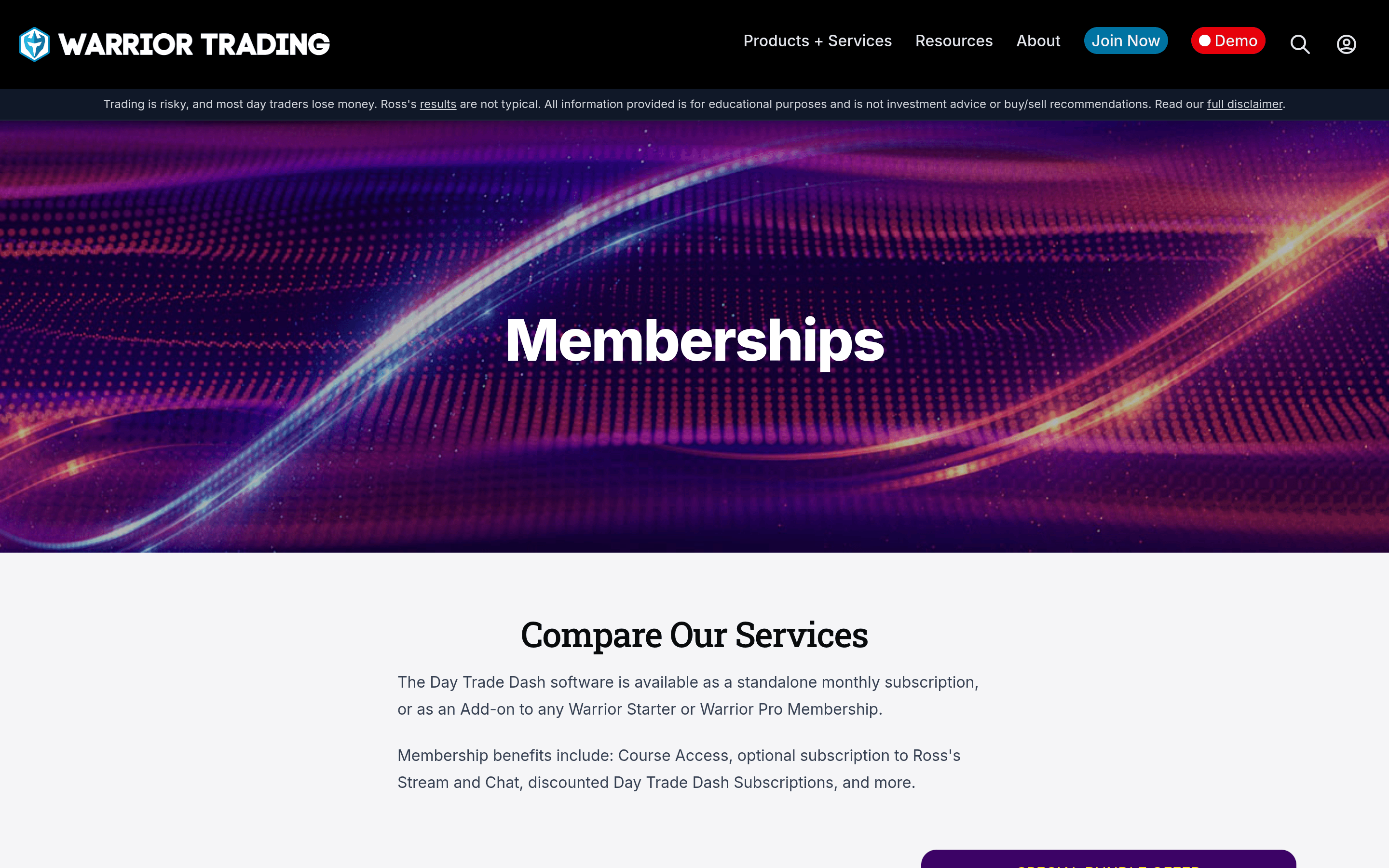
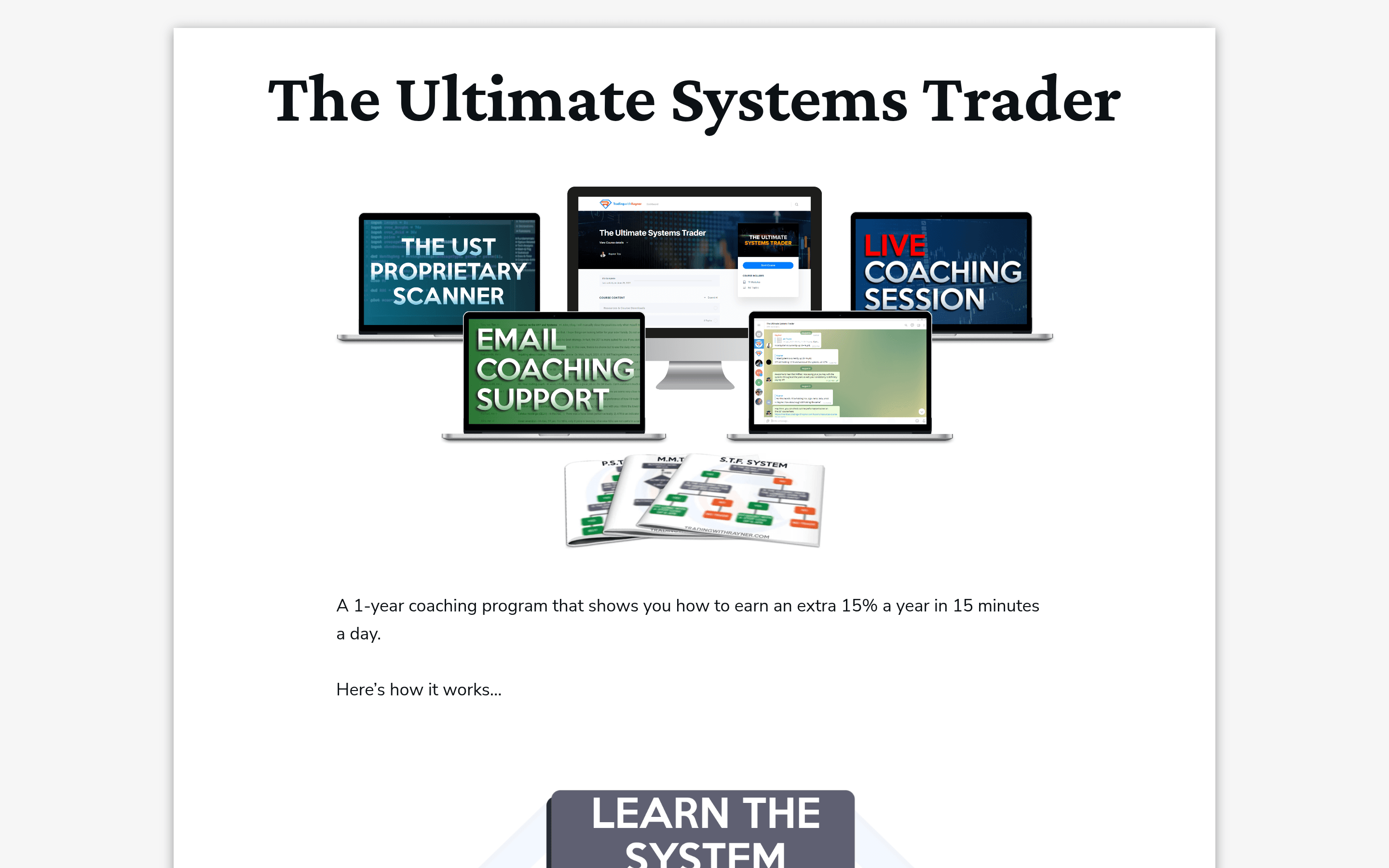
$4,999 is the top price of Rayner Teo's Ultimate Systems Trader. $10 to $20 is what most Udemy forex courses actually sell for. Between those two numbers sits almost every trading course on the internet, and most of them promise roughly the same thing: that by the end, you will know how to trade.
One r/Trading user summed up the suspicion that hangs over the whole market: "most people selling 'my strategy' make their money from the course, not the trading."
A forex course is worth it when it makes you practise real decisions and marks you when you get them wrong. Hours of video are not the measure. Judged that way, the most expensive options are hard to justify for a beginner with a few hundred pounds, and two of the best known are not about forex at all.
Quick answer: Forex courses are worth it only if they make you practise decisions and grade you, not because of their price or hours of video. Among 8 popular options checked in September 2026, prices run from about $10 on Udemy to $4,999 for Rayner Teo's top tier, and Warrior Trading and Bear Bull Traders teach US stocks rather than forex. BabyPips Premium ($29 a month) is the only text course of the eight and a well-liked one, Coursera Plus suits academic learners, and the Systemly Academy suits beginners who want graded lessons tied to real trade plans. Before paying for anything, check whether the course tests you and whether you could learn the same material free.
Systemly publishes this comparison, and our Academy is one of the eight courses in it. We have tried to be even-handed, and every competitor price below is sourced and dated 24 September 2026.
What eight popular trading courses cost in September 2026
We picked eight courses that beginners commonly ask about and recorded what each one charges, what you get, how it teaches and the catch. The last column is the one course sales pages would rather you skipped, so we will come back to it.
Prices are in US dollars because that is how most of these courses sell. Where we convert to pounds, we assume $1.34 to the pound for illustration only.
- Warrior Trading: Price (checked 24 Sept 2026): Starter $797 with a promo code (list $997); Pro $2,997 (list $3,997); Pro Special bundle $3,997; chat $147 a month and simulator $97 a month as add-ons; What you get: Day trading education; Format: Membership programme; The catch: Teaches US small-cap stocks, not forex. Settled with the FTC in 2022 over earnings claims
- Rayner Teo, Ultimate Systems Trader: Price (checked 24 Sept 2026): $2,499 or $4,999 one-off; What you get: A paid systems course, alongside twelve free video courses; Format: Online course; The catch: A large one-off outlay before you know whether trading suits you
- Asia Forex Mentor: Price (checked 24 Sept 2026): Hundreds to thousands of dollars (sources disagree; the price is unverified); What you get: About 20 hours of video; Format: Video; The catch: No price we could verify
- Bear Bull Traders: Price (checked 24 Sept 2026): Basic $99 a month; Elite reportedly $199 a month; What you get: Trading education and membership; Format: Membership; The catch: Focuses on US stocks. Trustpilot 4.1 from 38 reviews
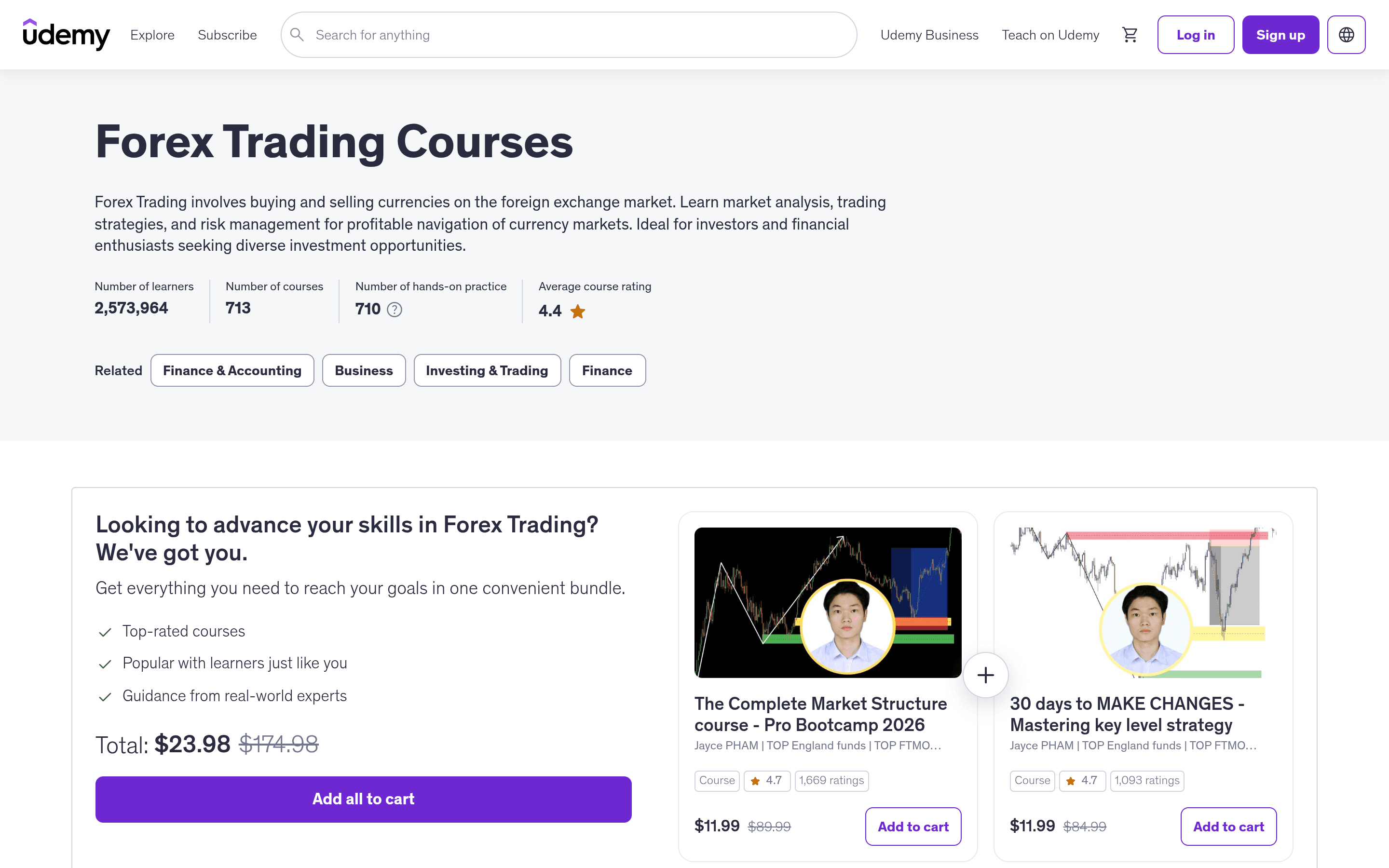
- Udemy: Price (checked 24 Sept 2026): Most sales at $10 to $20; list prices swing from about $10 to $300; What you get: 713 forex courses with an average rating of 4.4; Format: Video; The catch: Quality varies widely. Udemy prompts learners to review early in a course
- Coursera Plus: Price (checked 24 Sept 2026): $59 a month or $399 a year; What you get: Access to courses such as Yale's "Financial Markets" (4.8 from 32K ratings); Format: Video lectures; The catch: Academic, not a practical trading course
- BabyPips Premium: Price (checked 24 Sept 2026): $29 a month or $205 a year (the subscribe page shows $204); What you get: 9 advanced modules and 60+ lessons, daily analysis, MarketMilk, no ads; Format: Text with quizzes; The catch: Much of the School is still free; lessons do not connect to real-time charts
- Systemly Academy: Price (checked 4 Oct 2026): Free plan includes part of the Academy; paid plans from £9.99 a month; What you get: 32 courses, 123 lessons, 642 graded questions; Format: Graded questions with live-drawn charts; The catch: Mainly forex and gold, and far less total material than the long video courses
Sources for every row are listed at the end of this article.
Price per lesson, where the sums can be done
The title promised a price per lesson. Here is the honest finding first: only a few of these eight publish enough detail to do that sum properly. Most courses sell access, hours or membership, not a count of lessons. That tells you something on its own.
Here is what can be worked out.
BabyPips Premium
BabyPips Premium costs $205 a year for 9 advanced modules and 60+ lessons. Divide $205 by 60 and you get about $3.42 per premium lesson, and less if there are more than 60. If instead you paid monthly at $29 and finished in three months, you would pay $87, or about $1.45 per lesson. In pounds, that is roughly £65 for the three months. Note that on the monthly plan you follow a guided path with required checkpoint quizzes, while annual subscribers can take lessons in any order.
The basics are still free. BabyPips' own reply on Trustpilot says "more than half of all School lessons are still free, along with the accompanying quizzes". We compare the free and paid routes in detail in BabyPips vs Systemly.
Asia Forex Mentor
Sources disagree on this price, from $940 to $2,497, so treat it as unverified. The course is about 20 hours of video. On those figures, you would pay somewhere between about $47 and $125 per hour of video watched. That is a range, not a quote.
Udemy
Most Udemy forex courses sell for $10 to $20, which is about £7.50 to £15. Per lesson, that is often pennies. The cost is not the money. The cost is choosing well among the 713 forex courses on Udemy, which vary widely in quality.
Bear Bull Traders
Bear Bull Traders does not sell per lesson. Basic membership is $99 a month, which comes to $1,188 over a year, or about £887.
Warrior Trading and Rayner Teo
Neither publishes a lesson count we could verify, so we cannot give a per-lesson figure. What we can say is the size of the outlay. Warrior Trading's Pro tier at $2,997 is about £2,237. Rayner Teo's top tier at $4,999 is about £3,731.
Coursera Plus
At $399 a year, Coursera Plus gives access to a large catalogue. The per-lesson cost depends entirely on how many courses you finish, which is the whole trick of any subscription.
The Systemly Academy
Systemly (systemly.ai) is a UK-built forex and gold trade-planning app that turns live price data into a complete trade plan, with entry, stop, targets, position size and plain-English reasoning, and teaches the terms in a built-in academy of 32 courses.
On 4 October 2026 Systemly had a free plan, with paid plans from £9.99 a month and the whole Academy opening on any paid plan. There is a free plan, and it includes part of the Academy. What we can give you is the shape of the material. There are 123 lessons and 642 graded questions, which is about five graded questions per lesson. The whole Academy is just under 12 hours, so the average lesson takes a little under six minutes. The comparison that matters is not minutes per pound. It is how many of those minutes you spend answering rather than watching.
Why hours of video is the wrong measure
The common mistake is to judge a course by how much of it there is: 20 hours, 40 modules, a lifetime of updates. The consequence is that you buy passive time. You can watch a strategy explained for a weekend and still freeze the first time you have to decide where a stop goes, because nothing in those hours asked you to decide anything.
Think of it like a gym membership. The price buys access to the equipment. It does not buy fitness, and the members who pay the most are not always the ones who turn up. A trading course works the same way. The value is in the repetitions you actually do.
So judge a course by two questions. Does it make you practise decisions, such as choosing a stop, sizing a trade or saying what would make an idea fail? And does it grade you, so that a wrong answer costs you something small now rather than something large later?
On those two questions, the table above reorders itself. Text with quizzes (BabyPips) and graded questions (the Systemly Academy) do better than long video, even when the video is excellent. Coursera's Yale course is superb on how markets work, but it is not built to make you practise trade decisions.
What the Warrior Trading settlement tells you about earnings claims
In 2022, the US Federal Trade Commission brought a case against Warrior Trading. It ended in a $3 million settlement over what the FTC called "misleading and unrealistic claims" of earnings. Warrior Trading's site now states that "most day traders lose money".
We include this because it is a matter of public record and because it is useful to every buyer, not to single out one company. Warrior Trading still has a Trustpilot score of 4.8 from 2,751 reviews, and many members clearly value it. The lesson is about the category. When a course is sold with pictures of what you might earn, you are being sold an outcome no course can promise. The course itself cannot control what happens after you finish it.
That returns us to the quote at the top. If a seller's income comes from the course rather than from trading, their incentive is to sell more courses. That is not automatically wrong. It simply means their claims about their own results deserve the same scepticism you would give anyone selling anything.
The last column: the catch nobody puts on the sales page
Look again at the last column of the table. Three patterns run through it.
- Two of the most famous paid courses, Warrior Trading and Bear Bull Traders, focus on US stocks. If you want to trade forex or gold, much of what you pay for is about a different market.
- The most expensive options ask for the largest outlays before you have any evidence that trading suits you.
- The cheapest options, Udemy and free material, cost little money but a lot of time spent choosing.
None of this makes those courses bad. It makes them specific. The catch is only a problem when it is hidden from the buyer.
A worked example: the course against the account
Here is a sum that very few course buyers do. Say your trading account is £500, which is not unusual for a first-year trader. You plan to risk 1% per trade, which is £5.
Warrior Trading's Pro tier costs $2,997, about £2,237 at our assumed rate. That is roughly 4.5 times the entire account. Put another way, it is the same as the risk on about 447 trades at £5 each.
Rayner Teo's top tier, at about £3,731, is more than seven times the account. Even BabyPips Premium at $205 a year, about £153, is close to a third of it.
The point is not that paid education is always a bad idea. It is that for a small account, the cost of a course can easily exceed the account itself. Protecting the account comes first. You can check the risk and position size of any trade before you place it with the free Risk Doctor tool, and you can look at complete plans without paying anything on the public feed of community scans.
Seven checks before you pay for any trading course
Screenshot this list and run it against any course before you hand over a card number.
- Does it teach the market you actually want to trade? Forex and gold are not US small-cap stocks.
- Does it make you decide things, such as where a stop goes or how big a trade is, or only watch someone else decide?
- Does it grade you, and do wrong answers have any consequence?
- Can you learn the first third of it free somewhere else? If so, do that first.
- Does the sales page show earnings, cars or lifestyle? Remember the FTC case above.
- What does it cost against the size of your account?
- Is the price verified on the seller's own page, and does it auto-renew?
For a wider list of free and low-cost places to start, see our ranking of BabyPips alternatives.
Where a paid course is the better choice
A paid course can be the better choice for the right person, and some of these are excellent at what they set out to do.
- If you want to trade US stocks, Warrior Trading and Bear Bull Traders are built for that market, while the Systemly Academy is built mainly around forex and gold.
- If you want academic grounding in how financial markets work, Yale's "Financial Markets" on Coursera is highly rated, at 4.8 from 32K ratings.
- If you want a cheap, focused video on one narrow topic, a well-reviewed Udemy course at $10 to $20 is hard to beat on price.
- If you love reading, want a forum and like a friendly tone, BabyPips has a long-standing brand and forum, and 4.8 on Trustpilot from 443 reviews.
- If you want a long course in one teacher's voice, Rayner Teo's twelve free video courses let you judge his style before you consider the paid tier. His Trustpilot score is 4.7 from 4,776 reviews.
How we compared
We compared eight trading courses on price, what you get, format, and the main catch, using each provider's own pricing page where one exists, and review platforms and third-party reviews where it does not. Asia Forex Mentor's price is unverified and is given as a range. Where a lesson count was published, we worked out a price per lesson; where it was not, we say so. All figures were checked on 24 September 2026, and course prices change often, so check the seller's own page before you buy.
FAQ
How much does a forex trading course cost?
Forex trading courses range from free to several thousand dollars. In September 2026, most Udemy forex courses sold for $10 to $20, BabyPips Premium cost $29 a month or $205 a year, Coursera Plus cost $59 a month, and Rayner Teo's Ultimate Systems Trader cost $2,499 or $4,999. Asia Forex Mentor's price is unverified, with sources quoting $940 to $2,497.
Are forex courses worth it?
A forex course is worth it if it makes you practise decisions and grades you, such as choosing stops and sizing trades, rather than only showing video. Price and length are poor guides. Many beginners start with free material, such as BabyPips' free lessons, and only pay once they know which skills they are missing. No course can guarantee trading results.
What is the best forex trading course in the UK?
There is no single best forex trading course for every UK beginner. Look for forex rather than stock content, graded questions, a clear order and a link to real trade decisions. BabyPips suits readers, Coursera suits academic learners, and the Systemly Academy, built in the UK, suits beginners who want graded lessons tied to live trade plans.
Is BabyPips Premium worth it?
BabyPips Premium costs $29 a month or $205 a year as of April 2026, and adds 9 advanced modules and 60+ lessons, daily analysis and no ads. That works out to around $3.42 per premium lesson on the annual plan. More than half of the School lessons remain free, so many beginners finish the free part first.
Can you learn forex trading for free?
Yes. BabyPips' free lessons, broker academies such as IG Academy, and free video courses cover the basics. The free plan of the Systemly Academy includes part of its graded lessons. Free routes cost time rather than money, so the challenge is sequence and practice. Pair free lessons with a demo account and small, planned risk.
What was the FTC case against Warrior Trading?
In 2022, the US Federal Trade Commission brought a case against Warrior Trading that ended in a $3 million settlement over "misleading and unrealistic claims" of earnings. Warrior Trading's site now says "most day traders lose money". The case is a reminder to treat earnings claims in any trading course with caution.
Try the graded route before you spend
If you want to see whether graded lessons suit you before paying for anything, the Systemly Academy has a free plan that includes part of its 32 courses. For a structured course in smart money terms specifically, read our comparison of the ICT mentorship and a structured course.
Sources
- Reddit r/Trading, "most people selling 'my strategy'…"
- Warrior Trading memberships
- FTC v. Warrior Trading
- Rayner Teo, Ultimate Systems Trader
- DayTrading.com on Asia Forex Mentor
- Bear Bull Traders membership checkout
- Udemy forex topic page
- Edubracket on Coursera pricing in 2026
- BabyPips Premium lock-in page
- BabyPips subscribe page
- BabyPips on Trustpilot
- Take Profit review of the School of Pipsology
- Systemly
- Systemly Academy
- Systemly Risk Doctor
- Systemly community scans
Trading forex and CFDs carries a high risk of losing money, and most retail accounts do. Systemly is an educational and trade-planning tool. It does not provide financial advice or personal recommendations, and it is not authorised by the FCA to do so. Past outcomes do not predict future results.