
Forex paper trading in the US: practise under CFTC and NFA rules before you fund an account
 Systemly Team
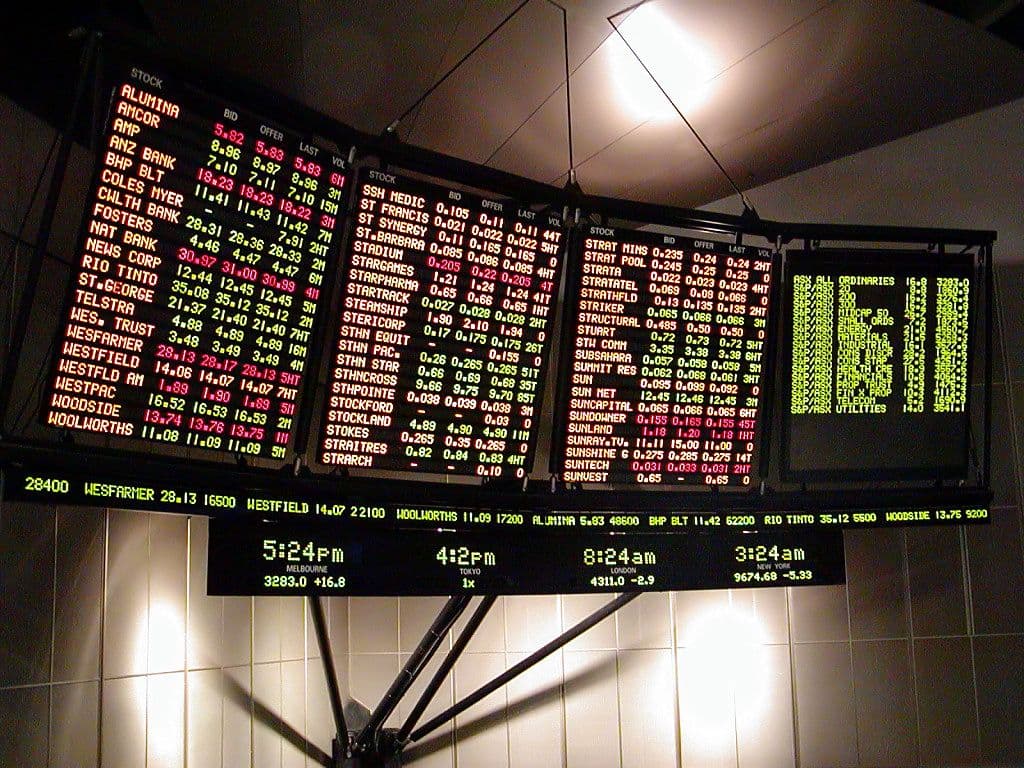
67.44%. That is the share of active retail forex accounts at FOREX.com US that were not profitable in the quarter to 30 June 2026. The dealer publishes the figure because federal rules make it. In each of the four quarters from July 2025 to June 2026, the not-profitable share sat between 65.75% and 69.09%.
So the answer comes first. If you are in the US and thinking about forex, paper trade before you fund anything, and practise inside the rules a US dealer will hold you to: 50:1 on major pairs, 20:1 on the rest, first in, first out, and no offsetting positions in one account.
Quick answer: Forex paper trading in the US is worth doing if you practise the habits US rules already demand: modest leverage, one direction per pair, exits in the order you opened them, and a fixed risk per trade. A dealer's demo teaches you its platform. Systemly's paper account is the better place to rehearse the plan itself, at your real balance in dollars, with real spreads and costs and a school that explains each step. Neither tells you how you will feel with real money, and neither changes the dealer statistics.
Systemly publishes this guide. We have tried to be fair: the US rule texts, the FOREX.com US figures and every other outside fact below were checked 19 October 2026.
This guide is education. It recommends no dealer, and nothing here suggests you open an account.
Who is allowed to offer you forex in the US
Retail forex in the US is narrow by design. Anyone who acts as the counterparty to your trade must be registered with the Commodity Futures Trading Commission (CFTC) as a retail foreign exchange dealer (RFED) or a futures commission merchant (FCM), unless another federal regulator already oversees them. The National Futures Association (NFA) is the self-regulatory body whose conduct rules those firms follow.
Four rules matter most to a beginner.
- Leverage. Under 17 CFR 5.9, the minimum security deposit is 2% of notional value for major currency pairs and 5% for all others, which works out at 50:1 and 20:1. The NFA decides which currencies count as major and reviews the list at least once a year.
- No offsetting positions. NFA Compliance Rule 2-43(b) says forex dealer members "may not carry offsetting positions in a customer account" and must offset them "on a first-in, first-out basis". Traders call this the FIFO and no-hedging rule. The text never uses the word "hedging", but you cannot hold a long and a short in the same pair in one account. The one exception lets a dealer, at your request, close a trade against an older trade of the same size rather than the oldest trade overall.
- No quiet adjustments. Rule 2-43(a) bars dealers from cancelling executed orders or adjusting your account, except as the rule allows.
- Published profit figures. Under 17 CFR 5.18(i), every RFED and FCM must work out each quarter what share of its non-discretionary retail forex accounts were profitable, after fees, with break-even counted as not profitable. Under 17 CFR 5.5(e), the dealer's risk disclosure statement must show the latest four quarters, with the legend "PAST PERFORMANCE IS NOT NECESSARILY INDICATIVE OF FUTURE RESULTS".
What about CFDs?
UK and Australian guides talk about CFDs. They are not part of a US beginner's choices. CFDs as sold in the UK are not generally available to US retail traders, because US law treats them as swaps or futures that must be traded on regulated venues. The SEC's 2019 action against a Swiss dealer that offered security-based swaps to US investors is a public example. Everything below concerns spot forex at a CFTC-registered dealer.
What the dealer numbers say, quarter by quarter
FOREX.com US (GAIN Capital, a registered FCM and RFED) publishes its figures on its disclosures page.
- 30 Sep 2025: Active non-discretionary accounts: 40,232; Profitable: 34.25%; Not profitable: 65.75%
- 31 Dec 2025: Active non-discretionary accounts: 38,886; Profitable: 31.72%; Not profitable: 68.28%
- 31 Mar 2026: Active non-discretionary accounts: 38,585; Profitable: 30.91%; Not profitable: 69.09%
- 30 Jun 2026: Active non-discretionary accounts: 34,791; Profitable: 32.56%; Not profitable: 67.44%
Roughly two in three active accounts at FOREX.com US were not profitable in each quarter from July 2025 to June 2026. That is one dealer's figure, for those quarters only. IG's US page still shows figures from 2020 and 2021, so we have not used it.
A third of accounts in profit does not mean a third of traders are skilled. Hayley and Marsh found in 2016 that retail FX traders did not improve with experience.
Keep the last column in mind. Once we reach FIFO, you will see why the rule US traders complain about most is also the one that blocks the commonest way of hiding a loss.
The mistake US beginners make with a demo
Most beginners open a demo, accept a large default balance and start clicking. At 50:1 on a big virtual balance, a full-lot EUR/USD trade feels normal.
The consequence is that the demo trains you for an account you will never have. Barber and Odean showed in 2002 that investors who moved to faster online trading traded more and did worse, and they blamed overconfidence rather than costs. In 2024, Anginer and colleagues found that simulator users who took more risk were more likely to open real-money accounts, and then traded more actively and significantly underperformed.
Think of it like learning to cook for two by practising on a banquet. You learn to handle a big pan. You learn nothing about portions.
Plenty of Americans start here: the top related US search for forex paper trading is "what is forex trading" (Google Trends, 12 months to October 2026). The fix is dull and it works. Set the paper balance to the dollars you would really fund, and give every trade a fixed risk.
Worked example: a $5,000 account under US rules
Example, not a signal.
Say you would fund a US account with $5,000. You set a Systemly paper balance of $5,000 and risk 1% per trade. The plan is a EUR/USD buy with a 25-pip stop.
- Risk per trade is 1% of $5,000, which is $50.
- On EUR/USD, one standard lot (100,000 euros) moves $10 per pip, so 0.01 lot moves $0.10 per pip.
- Over 25 pips, 0.01 lot risks 25 × $0.10 = $2.50.
- Lots = $50 ÷ $2.50 × 0.01 = 0.20 lots. A stop-out loses 0.20 × 25 × $10 = $50, before costs.
Change one number. With a 30-pip stop the sum gives $50 ÷ $3.00 × 0.01 = 0.1667 lots. You round down to 0.16, and the real risk is 0.16 × 30 × $10 = $48, or 0.96% of the account. Rounding up to 0.17 would break your own rule.
Now the margin. At an illustrative EUR/USD rate of 1.16, 0.20 lots is $23,200 of exposure. The 2% deposit for a major pair is $464, or 9.28% of the account. On a pair the NFA does not class as major, the 5% deposit on the same exposure would be $1,160, or 23.2%. Margin is a deposit, not a cost, but it shows how much room one trade leaves for the next. Systemly checks margin at retail leverage on paper. Do the 2% and 5% sum yourself as well, because that is the deposit a US dealer would hold. Our forex margin calculator guide and forex lot size calculator guide cover other pairs.
Last, the spread. At an illustrative 1-pip spread, 0.20 lots costs $2 to open, which is 4% of the $50 you are prepared to lose. Systemly fills a paper buy at the ask and triggers stops and targets on the bid, so that $2 appears on the trades dashboard instead of vanishing.
FIFO and no offsetting positions, practised on paper
The common mistake is to add a second EUR/USD buy at a better price, with its own tighter stop, and expect to close that one first. The consequence at a US dealer is that the oldest position closes first, so your tidy second ticket is not the one that goes. The other mistake is to "lock" a losing long by selling the same pair. A US dealer may not carry offsetting positions in your account, so the loss you hoped to park is realised.
To use an analogy, FIFO works like a numbered-ticket queue at a bank or a pharmacy counter. Whoever took the first ticket is served first, however impatient the next customer is.
The habit that suits these rules is one position per pair, managed in stages. Systemly's paper account splits a trade's lot across the plan's targets by default, for example 50/30/20, so 0.20 lots becomes 0.10, 0.06 and 0.04. Each target closes its own share of one position, which is how a US trader scales out of a single FIFO position. Use the cap on open trades per symbol to hold yourself to one position per pair. Turn on the same-currency exposure limit too: it counts EUR/USD long and GBP/USD long as two bets against the dollar, which is what they are.
Here is the payoff from the dealer table. A ban on offsetting positions removes the easiest way to avoid admitting a loss. It feels like a restriction, but it is the rulebook doing a job your own discipline should do.
How the Systemly loop works for a US reader
Systemly (systemly.ai) is a UK-built forex and gold trade-planning app that turns live price data into a complete trade plan, with entry, stop, targets, position size and plain-English reasoning, and teaches the terms in a built-in academy of 32 courses. It is not a dealer, it is not registered with the CFTC or the NFA, and it gives no personal recommendations. A real broker connection is not available yet.
- Learn the idea. In the Systemly Academy, "Orders and charts" and "Risk per trade" are free Foundations courses. "Why most lose" is free too, and it sits well beside the dealer table.
- Make a plan. Pick a major such as EUR/USD or USD/JPY, press Generate and read "Why this trade". When the checks fail, you get "no trade" with the reasons listed.
- Place it on paper. Press Execute, choose Paper, and the confirm dialog carries the band "Paper trade. No real money." The balance is in dollars, at any size from 100 to 1,000,000.
- Let it run. Alerts for the fill, each target, the stop and expiry arrive in the app and by browser notification. Results are checked every 15 minutes, and a stop is booked at the stop price even if it is noticed later.
- Review. The trades dashboard shows balance, equity, open P&L and risk in use, with the count of closed trades beside every statistic. Write one journal line per trade: did I follow the plan, did I move the stop, would I take it again?
Set the Limits tab first. The "Keep it simple" preset starts at 1% risk per trade, a 3% daily loss limit and a 6% weekly loss limit. It is an untested starting point, not a safer choice. The daily limit resets at 21:00 UTC, which is 17:00 in New York until 31 October and 16:00 from 1 November.
Your week in Eastern Time
The UK goes back to GMT on Sunday 25 October 2026. US clocks change a week later, on Sunday 1 November. For that one week, New York is 4 hours behind London instead of 5.
- London open: London time: 08:00; New York, to 24 Oct: 03:00 EDT; New York, 25 to 31 Oct: 04:00 EDT; New York, from 1 Nov: 03:00 EST
- US data at 08:30 ET: London time: 13:30 (12:30 from 25 to 31 Oct); New York, to 24 Oct: 08:30; New York, 25 to 31 Oct: 08:30; New York, from 1 Nov: 08:30
- Systemly daily loss reset (21:00 UTC): London time: 22:00 to 24 Oct, then 21:00; New York, to 24 Oct: 17:00; New York, 25 to 31 Oct: 17:00; New York, from 1 Nov: 16:00
Through the winter, the London and New York overlap runs roughly 08:00 to 11:00 in New York, by our reading of the clocks. A 03:00 alarm is no routine for someone with a job, so practise plans you can place before work or in the overlap, and let the alerts watch for you. Our guide to forex trading sessions and market hours explains why the overlap matters.
Where another tool is the better choice
- A dealer's own platform. Only its demo teaches its order ticket and margin screen.
- US stocks and options. Schwab's thinkorswim paperMoney and Webull's paper trading are built for those. Systemly opens US stocks and indices on Plus and above, but options are not on its market list. Our Webull and thinkorswim comparison is fair to both.
- Scalping. Systemly checks paper results every 15 minutes, so it is a poor fit for one-minute trading.
- A blank chart. TradingView's paper trading suits traders who draw everything themselves. See TradingView paper trading vs Systemly.
When paper trading is not the answer
Paper trading cannot reproduce fear. Holt and Laury found that as real stakes rose, people became far more cautious, while their choices over hypothetical sums barely moved. A 2024 meta-analysis by Brown and colleagues put the typical loss aversion coefficient at about 1.96, so a real loss feels roughly twice as bad as an equal gain feels good. On paper, a $50 loss weighs nothing. Our guide to paper trading vs live trading sets out what no simulator closes.
Sometimes the honest result of a month on paper is that forex is not for you. If your journal says that, you have kept your $5,000. Our checklist for how long to paper trade gives better exit tests than a calendar.
How we checked
We read 17 CFR 5.5, 5.9 and 5.18 on the Cornell Legal Information Institute, NFA Compliance Rule 2-43, the CFTC's retail forex fact sheet and its 2013 interpretation on retail commodity transactions, and the SEC's 2019 press release. Dealer figures come from FOREX.com US's disclosures page, and the studies are cited from their published abstracts. Every outside fact was checked 19 October 2026. Clock changes were computed with the IANA time zone database. Rules, dealer figures and margin lists change, so check each one before you act.
FAQ
Is forex paper trading legal in the US?
Yes. Paper trading uses no real money and no dealer takes the other side, so it is simply practice. The rules apply once real money is involved: a retail forex counterparty must be registered with the CFTC as an RFED or FCM and follow NFA conduct rules. Paper trading is a sensible way to learn those rules before they cost you anything.
What leverage can US forex traders use?
Under 17 CFR 5.9, a US dealer must collect at least 2% of notional value on major currency pairs and 5% on all others. That means maximum leverage of 50:1 on majors and 20:1 on the rest. The NFA decides which currencies count as major and reviews the list at least once a year. A dealer may ask for more than the minimum.
What is the FIFO rule in forex?
FIFO means first in, first out. Under NFA Compliance Rule 2-43(b), a US forex dealer must offset positions in the same pair in the order they were opened, so the oldest closes first. At your request it may instead match the oldest trade of the same size. In practice, US traders hold one position per pair and scale out of it, rather than opening several tickets with different stops.
Can you hedge forex in the US?
Not in one account at a US dealer. NFA Rule 2-43(b) says forex dealer members may not carry offsetting positions in a customer account, so a long and a short in the same pair are offset. The rule does not use the word "hedging", but it removes the tactic of locking a losing trade that many offshore videos teach.
What percentage of US forex traders lose money?
There is no single national figure, because each US dealer publishes its own. FOREX.com US reported that between 65.75% and 69.09% of active non-discretionary retail forex accounts were not profitable in each of the four quarters from July 2025 to June 2026. Those are one dealer's figures for those quarters, and they predict nothing about any individual.
Can I use Systemly's paper account in dollars?
Yes. A Systemly paper account can be set up in dollars, pounds or euros, at any balance from 100 to 1,000,000, and the currency stays fixed for that account. Paper trading is on every plan, including the free plan, which holds up to 3 open paper trades at once. A Systemly paper account does not expire through inactivity; it only changes when you reset it.
Practise the US rulebook before it is enforced
The free plan is a real start: paper trading in dollars, 3 open paper trades and the free Foundations courses. Create a free Systemly account and set the balance you would really fund.
The paid plans are where a US forex routine fills out. Starter and above open the whole Systemly Academy, all 32 courses and 123 lessons, including "Rates and policy" and "The calendar" for the 08:30 ET releases and "Using it honestly" for the review habit. Starter also adds chart layers, so the London and New York sessions and fair value gaps are drawn for you, and the TradingView export, which turns a plan into a Pine Script drawing if TradingView is where you chart. Plus and above add 4H and slower charts for patient one-position trades, Check my trade for the moment you are tempted to open a second ticket, and the full market list: US stocks, indices such as US30, NAS100 and SPX500, oil, silver and Bitcoin. Each paid plan has a 3-day free trial.
To see real plans first, browse the community scans feed, check any trade's size in the free Risk Doctor position size check, and read more on the Systemly home page. Our guides to risk per trade and the risk-reward calculator, forex signal win rates and practising risk management on paper are good next reads. If you trade gold, read paper trading gold in the US.
Sources
- CFTC: final retail forex rule fact sheet
- 17 CFR 5.9, security deposits for retail forex (Cornell LII)
- 17 CFR 5.18, recordkeeping and profitable-account calculation (Cornell LII)
- 17 CFR 5.5, risk disclosure statement (Cornell LII)
- NFA Compliance Rule 2-43, forex orders
- SEC press release 2019-226, security-based swaps offered to US investors
- CFTC: interpretation on retail commodity transactions (2013)
- FOREX.com US: disclosures and risk warning
- IG US: public disclosures (figures to 2021)
- Hayley and Marsh (2016), What Do Retail FX Traders Learn?
- Barber and Odean (2002), Online Investors: Do the Slow Die First?
- Anginer, Piza, Ray and Xu (2024), Trading Simulations and Real Money Outcomes
- Holt and Laury (2002), Risk Aversion and Incentive Effects (PDF)
- Brown, Imai, Vieider and Camerer (2024), Meta-Analysis of Empirical Estimates of Loss Aversion
- Schwab: thinkorswim paperMoney
- Webull: paper trading
- TradingView: paper trading main functionality
- Google Trends, 12 months to October 2026 (our own pull, relative interest scores)
Trading forex and CFDs carries a high risk of losing money, and most retail accounts do. Paper trading uses no real money, and paper results do not predict live results. Systemly is an educational and trade-planning tool. It does not provide financial advice or personal recommendations, and it is not authorised by the FCA or licensed in the UAE or elsewhere to do so. Past outcomes do not predict future results.