
Is copy trading profitable? eToro, ZuluTrade and Myfxbook vs learning the trade yourself
 Systemly Team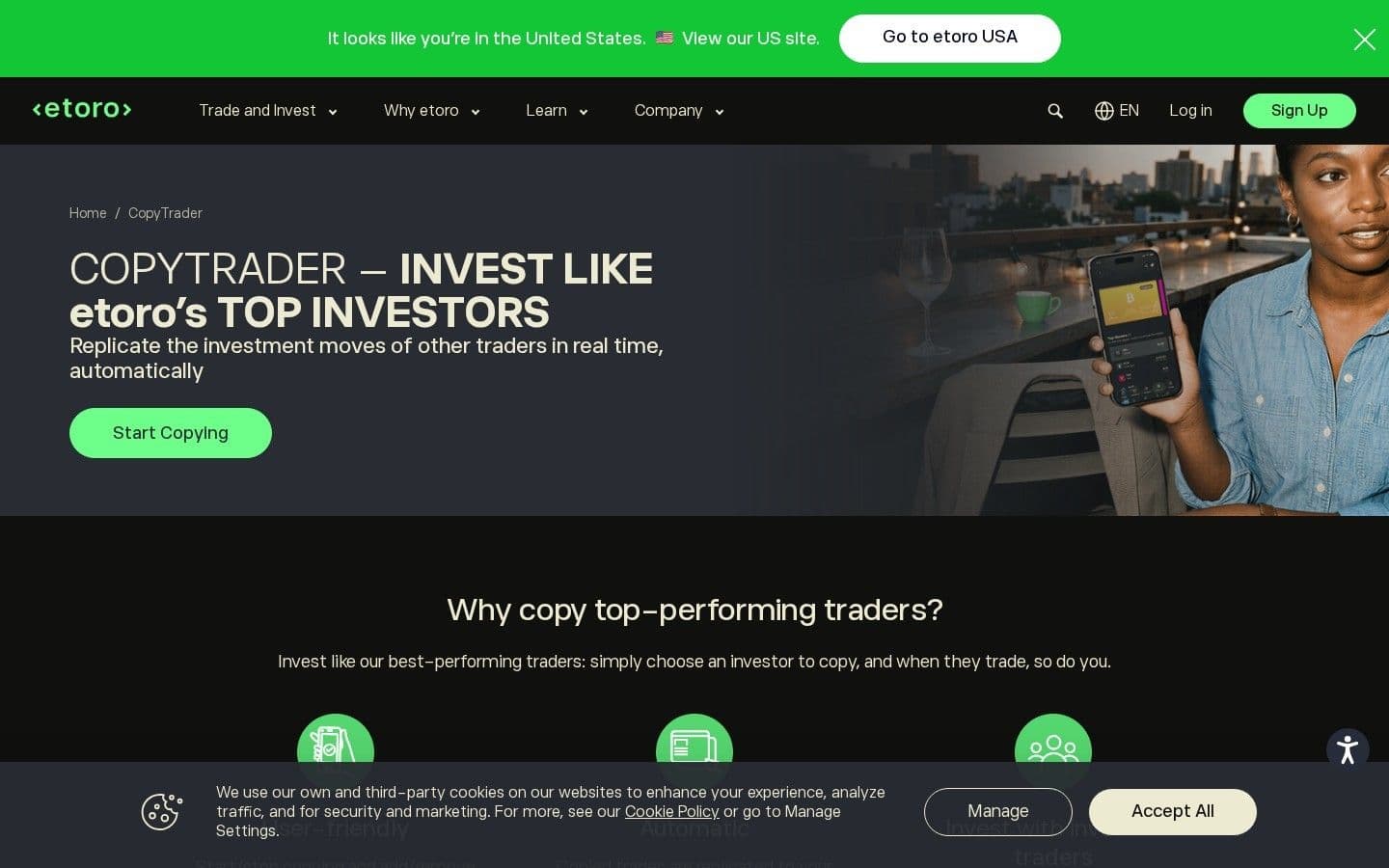
"It was very profitable for more than a year until one day big losses basically cleared the account."
That line was written by a copy trader on r/MalaysianPF. It contains the whole argument of this article in one sentence. Copy trading can look profitable for a long time. What you own, when the day goes wrong, is someone else's decision at your size, and nothing you learned along the way.
So, is copy trading profitable? It can be, for some people and for a while, but no platform can promise it. If you want to stay hands-off, copy trading is built for exactly that, and its records are the best-verified in retail trading. If you want to understand and control your own trades, a trade plan you read and place yourself is the better fit.
Quick answer: Copy trading can be profitable for periods, but you inherit the lead trader's risk, including their worst day, and learn little about why trades were taken. eToro CopyTrader, ZuluTrade and Myfxbook AutoTrade suit people who want to be hands-off and value verified track records. Systemly suits beginners who want to understand each trade, with the stop, the reason and the position size for their own balance shown in full. Both carry a real risk of losing money.
Systemly publishes this comparison. We have tried to be fair, and every competitor fact below is sourced and dated 24 September 2026.
Is copy trading profitable?
The honest answer has three parts.
First, it can be. If the trader you copy does well, your account follows them, minus any costs. eToro lists more than 2,800 Popular Investors with risk scores, and Myfxbook has become the standard place to check a trader's verified statistics.
Second, it often is not. On eToro, 52% of retail CFD accounts lose money, according to BrokerChooser's figures from 17 September 2026. That figure covers all eToro retail CFD accounts, not only copiers, but it is the backdrop to every copy you make. The FCA's broader figure, from September 2025, is that "80% of customers lose money when investing in CFDs."
Third, the losses tend to arrive differently from the gains. Gains come as a slow climb that builds trust. Losses can arrive in a single day, as the r/MalaysianPF user found. Another Redditor put the other half of the problem even more plainly: "I lost 20k last year in forex lol, i didn't knew anything I was just copy trading." (r/thesidehustle).
That second quote is the more important one. The loss hurt. The fact that it taught nothing is what made it expensive.
How the three big copy platforms work
Copy trading is a service in which your account automatically mirrors the trades of another trader, in proportion to the money you allocate. Here is how the three best-known platforms set it up, as of 24 September 2026.
eToro CopyTrader
eToro CopyTrader is a copy-trading feature inside the eToro broker platform. There is no copy fee, and the minimum is $200 per trader you copy. You choose from more than 2,800 Popular Investors, each shown with a risk score. eToro's Trustpilot score is 4.1 from 32,104 reviews. In August 2023 the Australian regulator ASIC sued eToro over the design and distribution of its CFD products. We could not find the outcome of that case.
ZuluTrade
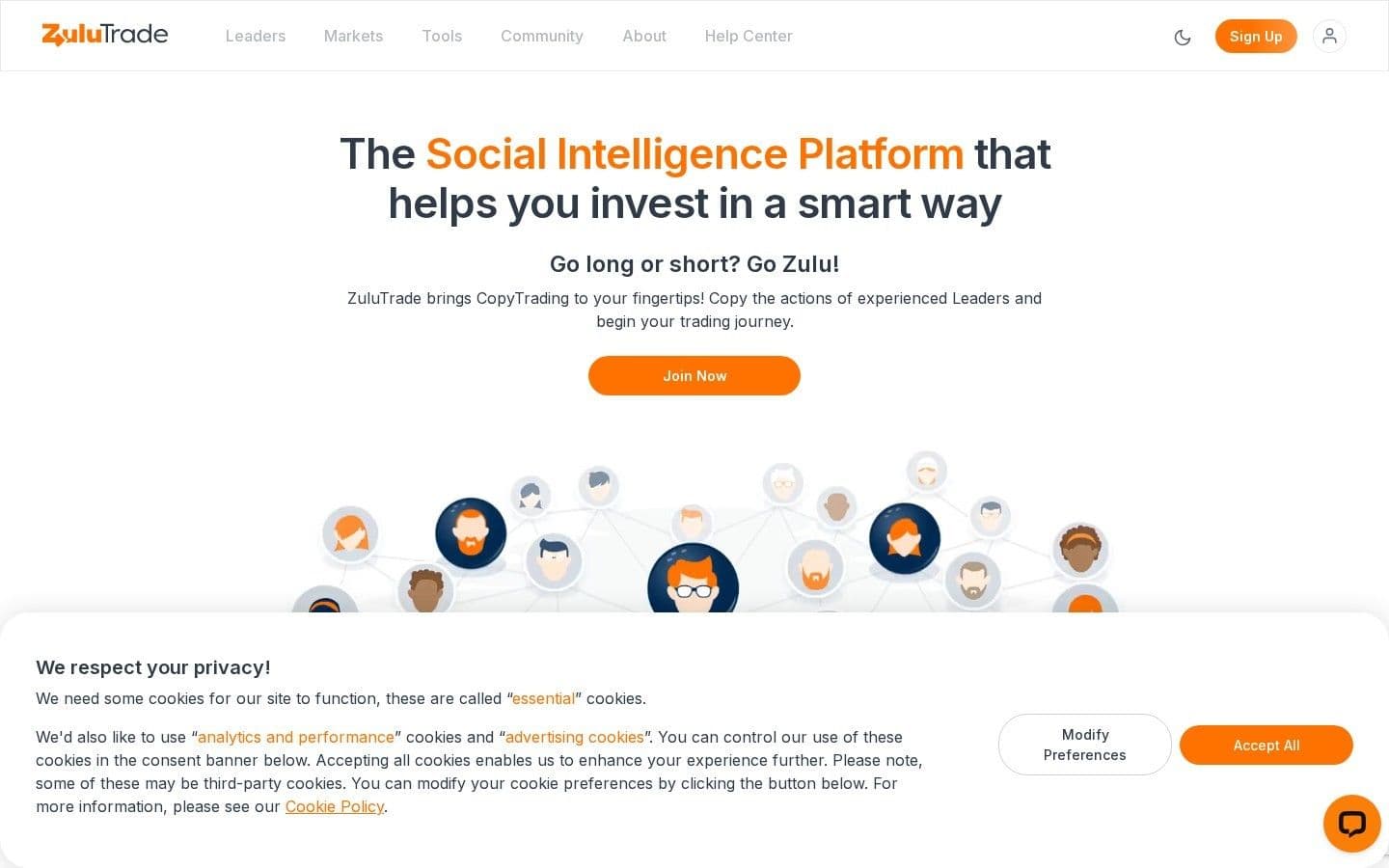
ZuluTrade is a copy-trading platform that connects to a range of brokers. It is free at integrated brokers, and otherwise costs $10 a month per copied strategy. Its Trustpilot score is 1.3 from 93 reviews. In 2014 the US Commodity Futures Trading Commission fined ZuluTrade $150,000 plus $80,000 in disgorgement for failure to supervise. That was more than a decade ago, and we mention it as history, not as a comment on the service today.
Myfxbook AutoTrade
Myfxbook AutoTrade is a copy service from Myfxbook, the site most traders use to verify account statistics. There is no platform fee. You need a $1,000 minimum balance, and signal providers need three months of history before they can be listed. Its Trustpilot score is 2.6 from 41 reviews.
A fourth option, MQL5 Signals, mirrors trades inside MetaTrader. Paid MQL5 signals must cost $30 a month or more, and account histories are monitored live. There is no trade plan and no reasoning attached.
What copy platforms do better than anyone
This deserves saying clearly before we get to the costs. Copy platforms have the best verified track records in the retail trading industry.
A Telegram channel posts its own results. A signal seller quotes its own percentage. A copy platform shows you the account itself, trade by trade, with a history that the trader cannot quietly rewrite. Myfxbook is the de facto standard for verified account statistics. MQL5 monitors histories live. eToro puts a risk score on every Popular Investor.
If your main question is "has this person actually done what they say?", a copy platform answers it better than any signal service, and better than Systemly, whose record of outcomes is kept by Systemly itself.
The three costs nobody puts on the pricing page
The price of copy trading is often zero. The cost is somewhere else.
Cost one: you learn nothing
The common mistake is to assume that watching trades appear in your account is a way of learning to trade. The consequence is that after a year you know which person to copy, but not why any single trade was taken, where its stop was, or what would have made it wrong. When that person has a bad month, you have no way of telling whether the strategy has broken or is simply having a bad month.
Think of it like being a passenger in a car for a year. You may have been driven safely to hundreds of places. You still do not hold a licence, and you cannot tell whether the driver has just started taking corners too fast.
Cost two: their risk becomes your risk, in proportion
Copy trading sizes your trades in proportion to the money you allocate. That sounds fair, and it is, until you think about what it means. If the lead trader risks 2% of their account on a trade, you risk 2% of your allocation. If they risk 20%, you risk 20%.
An example makes this concrete. Say you allocate $200, the eToro minimum per copy. If the trader's account falls 30% in a day, your copy falls by about the same share: $60. You did not choose that risk. You inherited it, along with every other decision they made that day.
The arithmetic of recovery then works against you. An account that falls from $1,000 to $500 has lost 50%, but it needs to gain 100% to get back to where it started. A copy that halves has to double.
It is the same as splitting a restaurant bill in proportion to how much you ate. That is fair until the person who ordered for the whole table picks the most expensive wine without asking you.
Cost three: you inherit their worst day
The r/MalaysianPF quote describes a shape worth understanding: a long run of small, steady gains, then a single day that erases them.
There is a simple reason this can happen. A strategy that takes small profits and allows much larger losses will win most of the time. With a 10-pip target and a 30-pip stop, price moving at random would touch the target first about 75% of the time. That produces a smooth, confidence-building record. It also means one loss costs three wins, and a cluster of losses can undo months. We set out that arithmetic step by step in our guide to why high win rates mean less than you think.
A risk score and a full history help, and you should read both. But a year of past data only shows the worst day so far. It cannot show you the worst day to come.
Copy trading vs a trade plan: the table
- What it is: eToro CopyTrader: Copy feature inside a broker; ZuluTrade: Copy platform across brokers; Myfxbook AutoTrade: Copy service from a statistics site; Systemly: Trade-planning app with a built-in academy
- Cost: eToro CopyTrader: No copy fee; ZuluTrade: Free at integrated brokers, or $10 a month per strategy; Myfxbook AutoTrade: No platform fee; Systemly: Free plan; paid plans add alerts, more plans and execution
- Minimum: eToro CopyTrader: $200 per copy; ZuluTrade: Not stated; Myfxbook AutoTrade: $1,000 balance; Systemly: None stated
- Verified track record: eToro CopyTrader: Popular Investor histories with risk scores; ZuluTrade: Provider histories; Myfxbook AutoTrade: The industry standard for verified statistics; Systemly: Every plan tracked against real price by Systemly, not by a third party
- Hands-off: eToro CopyTrader: Yes; ZuluTrade: Yes; Myfxbook AutoTrade: Yes; Systemly: Not unless you turn it on. You read the plan and decide; on Pro, automatic sending can send orders to your MT5 account for new signals, community signals included, within limits you can change
- Do you learn why a trade was taken?: eToro CopyTrader: Rarely; ZuluTrade: Rarely; Myfxbook AutoTrade: Rarely; Systemly: Yes, each plan explains its stop, targets and what would make it fail
- Position size: eToro CopyTrader: Proportional to your allocation; ZuluTrade: Proportional to your allocation; Myfxbook AutoTrade: Proportional to your allocation; Systemly: Calculated from your balance and the risk % you choose
- Whose worst day you get: eToro CopyTrader: The lead trader's; ZuluTrade: The provider's; Myfxbook AutoTrade: The provider's; Systemly: Your own decisions, one plan at a time
- Trustpilot (24 Sept 2026): eToro CopyTrader: 4.1 from 32,104; ZuluTrade: 1.3 from 93; Myfxbook AutoTrade: 2.6 from 41; Systemly: Not covered in our research
Two rows go to the copy platforms, and we mean it. They are hands-off by design, which Systemly is only on Pro with automatic sending turned on, and their records are verified by the platform rather than by the product itself. If those two rows matter most to you, copy trading may well be the better fit.
Where a trade plan fits
The alternative to copying a person is reading a plan and deciding for yourself. That is the approach Systemly (systemly.ai) takes.
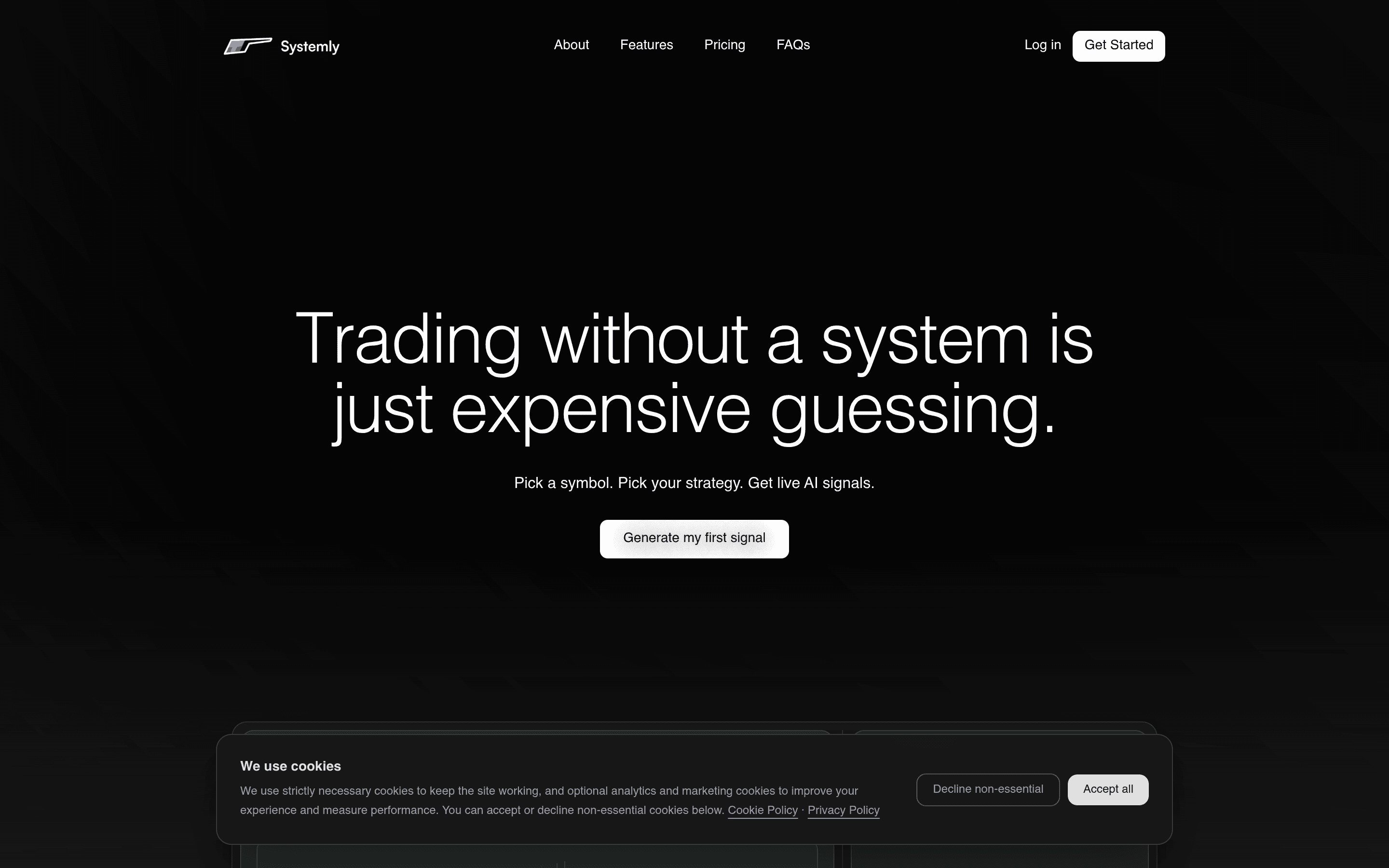
Systemly is a UK-built forex and gold trade-planning app that turns live price data into a complete trade plan, with entry, stop, targets, position size and plain-English reasoning, and teaches the terms in a built-in academy of 32 courses.
Set that against the three costs above.
- On learning: every plan says why the stop sits where it does and what would make the trade fail. When a term such as "invalidation" or "liquidity" appears, the Academy lesson that explains it is in the same app. The Academy has 123 lessons and 642 graded questions, and a few wrong answers end the attempt, so you pass lessons rather than scroll past them.
- On sizing: the plan works out lots from the balance and risk percentage you enter. If you choose 1%, the plan sizes for 1%. Nobody else's appetite sets it for you.
- On the worst day: each plan is one decision, with a stop set in advance and checked by code. Deterministic code enforces a minimum stop width, moves stops away from obvious resting liquidity and re-derives the position size after the AI drafts the plan. "The AI reads the chart. The code owns the trade."
Once a plan is sent, Systemly tracks it against real price: which level was hit, at what time, and how deep the move against it went first. Losing plans stay in that record. Real examples sit in Systemly's public feed of community scans.
On Plus and Pro, Systemly can send a plan to a connected MT5 account. Sending one trade is still your decision: you see the plan, choose the risk and confirm. Automatic sending, on Pro, is different. It is off until you turn it on. Once it is on, it sends orders for new signals within limits you can change, without asking you each time, and that includes Systemly's community signals. That is close to copy trading, so judge it the way you would judge copy trading.
When copy trading makes sense
Copy trading is the better choice for some people, and it would be dishonest to pretend otherwise.
It makes sense if you have decided you do not want to learn to trade, and want exposure to a trader you have researched, much as you might choose a fund. It makes sense if you value a verified history above everything else, because no signal service or planning app matches Myfxbook's statistics or MQL5's live-monitored histories. And it makes sense if you only allocate money you can afford to lose entirely, and read the risk score and full history of every trader before you copy them.
It makes less sense if your real goal is to become able to trade yourself, or if you are copying with money you need.
Here is a short decision tree.
- If you want to be hands-off and accept that you will not learn why trades are taken, then a copy platform with verified histories is the honest tool.
- If you want to understand each trade and set your own risk, then a trade plan you read and place yourself fits better.
- If you are doing a prop firm challenge, then check the firm's rules first. FTMO, FundedNext, The5ers and FundingPips all ban copying trades from outside signal sellers into funded accounts, according to a third-party summary of prop firm copy rules. Our guide to Discord signals and prop firm challenges covers this in detail.
- If you are not sure how much you are risking on any single trade, then stop and work it out before you copy or plan anything.
For that last step, Risk Doctor is a free tool that checks a trade's risk and position size before you place it.
How we compared
We compared eToro CopyTrader, ZuluTrade and Myfxbook AutoTrade with Systemly on cost, minimums, verified records, sizing, how hands-off each is, and what you learn. Facts come from platform pages, Trustpilot, the CFTC and published loss figures, checked on 24 September 2026. The eToro loss figure is from BrokerChooser, dated 17 September 2026. Fees and minimums change, so check each platform's current terms.
FAQ
Is copy trading profitable?
Copy trading can be profitable for periods, but no platform can promise it. Your results follow the trader you copy, including their worst days. On eToro, 52% of retail CFD accounts lose money according to BrokerChooser on 17 September 2026. Some copiers describe long runs of gains followed by a single heavy loss, so treat any copy as money you could lose.
Is copy trading worth it for beginners?
It depends on the goal. If a beginner wants to be hands-off, copy trading offers verified records that most signal services cannot match. If the goal is to learn to trade, copying teaches very little, because trades arrive without reasons. A trade plan that explains the stop, the size and what would make it fail is a better way to learn.
Is copy trading legit?
The major copy platforms are real services with real records. eToro CopyTrader has no copy fee and a $200 minimum per copy. Myfxbook AutoTrade needs a $1,000 balance and three months of provider history. ZuluTrade was fined by the CFTC in 2014 for failure to supervise. Legitimate does not mean safe: copiers inherit the lead trader's risk.
How does copy trading sizing work?
Copy platforms usually size your trades in proportion to the money you allocate. If the lead trader risks 20% of their account on a trade, you risk about 20% of your allocation. On a $200 copy, a 30% fall in the lead trader's account means a loss of about $60. You do not choose the risk per trade yourself.
What is the difference between copy trading and a trade plan?
Copy trading places another trader's trades in your account automatically. A trade plan gives you the entry, stop, targets, position size for your balance and the reasoning, and you decide whether to place it. Copy trading is hands-off. A trade plan asks more of you but lets you understand and control each trade.
Can you copy trade on a prop firm account?
FTMO, FundedNext, The5ers and FundingPips all ban copying trades from outside signal sellers into funded accounts, according to a third-party summary. FundingPips bans "copying trades into your FundingPips account from an external source, including signal providers or trade copier services". Rules change, so check each firm's own terms before you trade.
Try a plan instead of a person
If you would rather understand the trade than follow the trader, see how Systemly builds a complete plan on the free plan, or compare copy services with other providers in our forex signal providers comparison.
Sources
- r/MalaysianPF, copy trading loss: https://www.reddit.com/r/MalaysianPF/comments/1w8ld93/_/p83qo2m/
- r/thesidehustle, copy trading loss: https://www.reddit.com/r/thesidehustle/comments/1nyhei0/_/ni38k4k/
- CFTC, ZuluTrade 2014 order: https://www.cftc.gov/PressRoom/PressReleases/6992-14
- MQL5 minimum signal price: https://www.mql5.com/en/forum/204680
- Thor Trade Copier, prop firm copying rules summary: https://thortradecopier.com/blog/forex-prop-firms-that-allow-copy-trading-eas
- eToro retail CFD loss figure: BrokerChooser, 17 September 2026
- FCA, CFD loss figure: FCA statement, September 2025
- Systemly community scans: https://app.systemly.ai/scans
- Systemly Risk Doctor: https://app.systemly.ai/tools/risk-doctor
Trading forex and CFDs carries a high risk of losing money, and most retail accounts do. Systemly is an educational and trade-planning tool. It does not provide financial advice or personal recommendations, and it is not authorised by the FCA to do so. Past outcomes do not predict future results.