
eToro virtual portfolio vs Systemly: $100,000 of fake money, or your real account size?
 Systemly Team
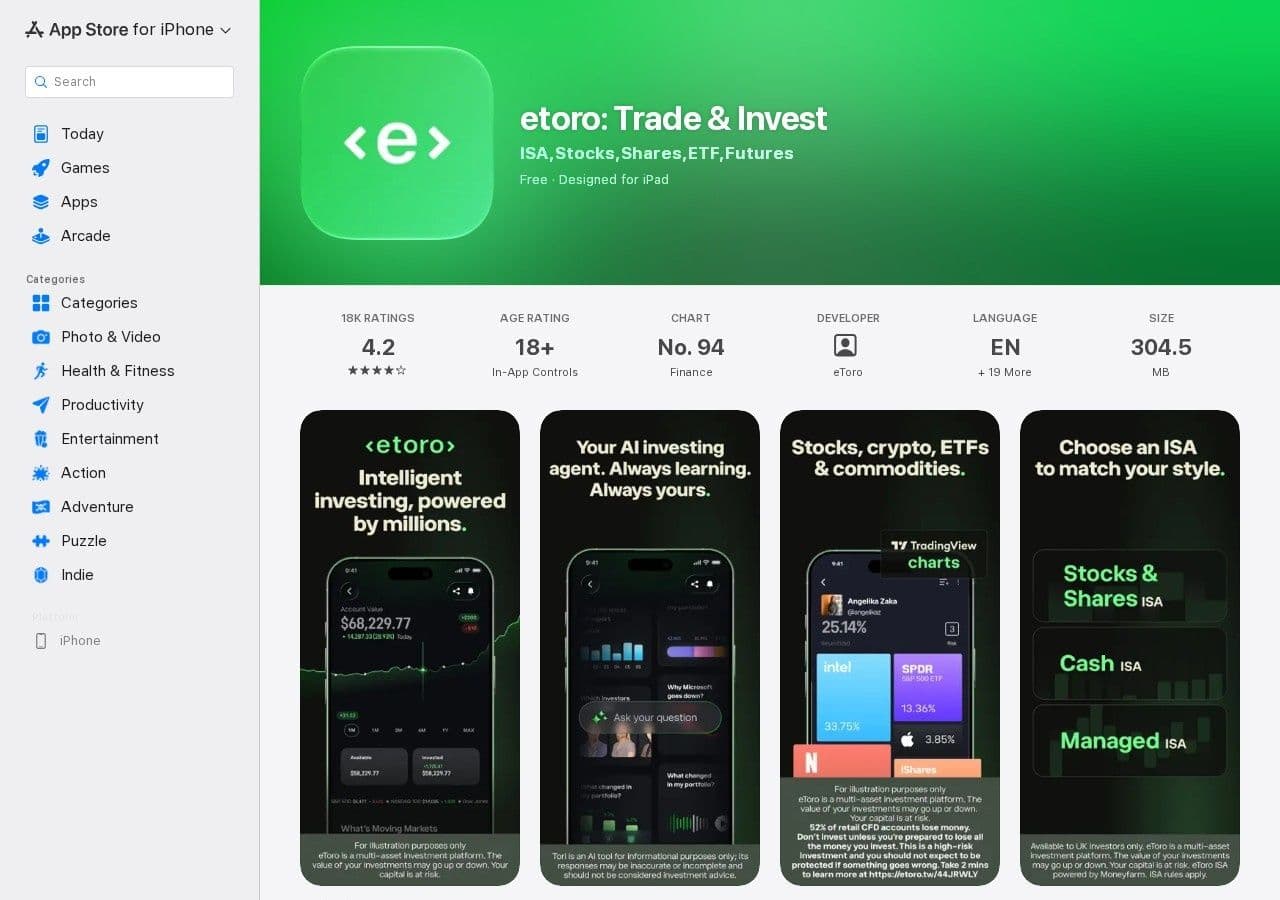
$100,000. That is what eToro puts in every Virtual Portfolio (eToro demo account). Now think about the amount you will really start with. For many first-year traders in London or Dubai it is closer to £1,500. The gap between those two numbers is roughly 50 to 1, and every habit you build on the larger one has to shrink fifty times when the money becomes real.
So here is the answer. Use the eToro demo account if you want to explore eToro's 7,000-plus instruments or see how CopyTrader behaves before you risk money. Use Systemly if you want to learn to plan and size your own forex or gold trades, practised at the account size you will really have.
Quick answer: The eToro Virtual Portfolio is a free demo inside every eToro account, with $100,000 of virtual funds, 7,000-plus instruments and CopyTrader, which eToro says works in the demo exactly as in real mode. It is the better choice for exploring many markets and for learning how copy trading behaves. Systemly (systemly.ai) is the better place to paper trade if you want to learn the trade yourself: every paper trade starts from a plan with reasons, sized at a balance you choose from 100 to 1,000,000, with costs, loss limits and a 32-course Academy beside it.
Systemly publishes this comparison. We have tried to be fair, and every eToro fact below comes from eToro's own demo page, checked 18 October 2026.
Similarweb's modelled estimates for September 2026 put the UK first among countries sending traffic to etoro.com, and eToro appears among UK and UAE "demo account" searches (Google Trends, 12 months to October 2026). It is a serious, widely used platform. The question is what its demo teaches a beginner, and the answer turns on one number that eToro, to its credit, lets you change.
What the eToro Virtual Portfolio is
The eToro Virtual Portfolio is a practice mode built into every eToro account. eToro's demo page says "every eToro account is credited with $100,000 in virtual funds", that you can practise "with all 7,000+ instruments", and that leverage, stop loss, take profit and CopyTrader are all available (eToro demo account).
Three details from that page matter.
- CopyTrader works in virtual mode. eToro says it "works in the demo exactly as it does in real portfolio mode".
- Top-ups are capped. You ask Customer Service to add funds, and "the maximum we can add to your virtual balance is $100,000".
- The balance can go down. eToro can reduce your virtual balance to a minimum of $2,000, again through Customer Service.
That last point is the most useful thing on the page for a beginner, and it is easy to miss. It means you can bring eToro's demo much closer to a real first account. You have to ask, and you cannot go below $2,000, but the option is there.
What Systemly paper trading is
Systemly is a UK-built forex and gold trade-planning app that turns live price data into a complete trade plan, with entry, stop, targets, position size and plain-English reasoning, and teaches the terms in a built-in academy of 32 courses.
You set up a paper account in one step. The presets are 1,000, 10,000 or 50,000, or any custom figure from 100 to 1,000,000, in pounds, dollars or euros. The currency is fixed per account. Every plan is then sized against that balance with your risk rules. You place the trade with the same Execute button a broker trade would use, choosing Paper, and the dialog says "Paper trade. No real money."
The rules are strict. Buys fill at the ask, stops and targets trigger on the bid, limits only fill when price trades through, and real spreads and costs apply, with swap and slippage as labelled assumptions. Results are checked every 15 minutes. The free plan holds 3 open paper trades at once.
One trade on three balances
The common mistake is to treat the starting balance as a detail. The consequence is that your sense of a normal position is set by the demo, not by your bank account. Think of it like learning to ride on a bicycle with stabilisers the size of a car. You will feel steady right up to the moment they come off.
Example, not a signal. You plan to trade with £1,500. At an illustrative exchange rate of 1.30, that is $1,950. You risk 1% per trade, which is $19.50. A plan buys AUD/USD with a 30-pip stop. On AUD/USD, one standard lot moves $10 per pip, so the stop costs $300 per lot.
- $100,000 (eToro default): 1% risk: $1,000; Lots (risk ÷ $300, rounded down to 0.01): 3.333, so 3.33; Risk at the stop: $999; Same lots on your real $1,950: $999, about 51%
- $2,000 (eToro's minimum, on request): 1% risk: $20; Lots (risk ÷ $300, rounded down to 0.01): 0.0667, so 0.06; Risk at the stop: $18; Same lots on your real $1,950: $18, about 0.92%
- $1,950 (your real size): 1% risk: $19.50; Lots (risk ÷ $300, rounded down to 0.01): 0.065, so 0.06; Risk at the stop: $18; Same lots on your real $1,950: $18, about 0.92%
The first row is the trap. Sized properly for $100,000, the trade risks 1%. Carried to your real account, the same 3.33 lots would lose about half of it on one stop.
The second row is eToro's fix, and it works. At $2,000 the size is the same as on your real account, so the lower balance is worth knowing about for anyone who uses eToro's demo.
The third row is where the two products part. A reader starting with £500, about $650 at the same rate, cannot get eToro's demo below $2,000. They can set the paper balance to £500 directly in Systemly, or to $650 if they prefer dollars. On a balance that small, some plans need less than the 0.01 minimum lot, and Systemly refuses those plans rather than sizing up, which is what a broker would do.
Platforms express size differently, in lots, units or amounts. The arithmetic above still holds: risk is position size multiplied by the distance to your stop, whatever the platform calls it.
Copy trading on virtual money
CopyTrader is eToro's best-known feature, and practising it on virtual money before risking real money is sensible. The trouble is what it teaches.
The common mistake is to judge a trader you copy by a few good weeks on virtual. The consequence is that you learn who had a good month, not why any trade was taken. Think of it like being a passenger on a long drive. You arrive, and you could not drive the route yourself.
The research on short records is sobering. A study of more than 3,000 retail forex traders found that after a small gain, rather than a small loss, the number of trades they placed rose by 55%, even though past wins did not predict future ones (Ben-David, Birru and Prokopenya, 2016). Only 16.21% of those traders were profitable when they left the sample. Good runs make people bolder, whether the run belongs to them or to someone they copy.
There is a second effect worth naming. Thaler and Johnson found that people take more risk with money they feel they have won, which they called the house money effect (Thaler and Johnson, 1990). Their experiments used real gains, not virtual funds. Applying it to a $100,000 demo is an analogy, not a tested finding. Still, a balance that was never yours is the purest form of house money we can think of.
Systemly takes the opposite approach. There is no copying. You place each paper trade yourself, manually, from a plan that tells you why it exists. For the wider argument, read copy trading vs trade plans.
eToro Virtual Portfolio vs Systemly, side by side
- Price: eToro Virtual Portfolio: Free with every eToro account; Systemly paper trading: On every plan, including Free
- Starting balance: eToro Virtual Portfolio: $100,000; Systemly paper trading: You choose: 1,000, 10,000, 50,000 or 100 to 1,000,000
- Lowering the balance: eToro Virtual Portfolio: Through Customer Service, minimum $2,000; Systemly paper trading: Set it yourself at set-up
- Adding funds: eToro Virtual Portfolio: Through Customer Service, capped at $100,000 in total; Systemly paper trading: Reset starts a new account; old history kept
- Instruments: eToro Virtual Portfolio: 7,000+; Systemly paper trading: Major forex pairs and gold; silver, oil, indices, stocks and Bitcoin on Plus and Pro
- Copy trading: eToro Virtual Portfolio: CopyTrader works as in real mode; Systemly paper trading: None; you place each trade yourself
- Orders: eToro Virtual Portfolio: Your own trades on any instrument; Systemly paper trading: Systemly's plans, through Execute and Paper
- Trading costs: eToro Virtual Portfolio: Not described on the demo page, beyond the demo itself being free; Systemly paper trading: Real spreads and costs; swap and slippage as labelled assumptions
- Updates: eToro Virtual Portfolio: As prices move; Systemly paper trading: Results checked every 15 minutes
- Risk limits: eToro Virtual Portfolio: None stated; Systemly paper trading: 1% per trade, 3% daily and 6% weekly loss limits by default
- Plan and reasoning: eToro Virtual Portfolio: None stated; Systemly paper trading: Entry, stop, targets, size and "Why this trade"
- Teaching: eToro Virtual Portfolio: Not part of the demo page; Systemly paper trading: 32-course Academy
- Path to live: eToro Virtual Portfolio: Switch to your real portfolio; Systemly paper trading: No live broker connection yet
- Open trades on a free account: eToro Virtual Portfolio: Not stated; Systemly paper trading: 3 on the free plan
eToro is stronger on markets, copy trading, speed, open positions and the step to live. It also deserves credit for the $2,000 floor, which is more than most demos offer. Systemly is stronger on the plan, the balance you control and the rules.
The Systemly loop for an AUD/USD beginner
Here is the loop for the £1,500 reader above. Example, not a signal.
- Learn the idea. Start with What this market actually is, free in Foundations. Then Rates and policy in Macro & Fundamentals explains why central bank decisions move AUD/USD, and Top-down and Trend lines in Technical Analysis show how a plan reads the higher timeframe first. Those three open on Starter, Plus and Pro.
- Generate a plan and read why. Open AUD/USD and press Generate. In under a minute the plan appears on the chart with entry, stop, targets and the numbered moves card. If a major release for either currency falls inside the trade's life, the plan carries a news warning.
- Press Execute and choose Paper. Because you set the paper balance to £1,500 when you created the account, the size comes from your 1% risk on that figure, and the lot is split across the targets, for example 50/30/20, so each target banks its share.
- Let it run. Alerts for the fill, each target, the stop and expiry arrive in the app and by browser notification. Results are checked every 15 minutes, and a stop is recorded at the stop price even if it is noticed later.
- Review and repeat. The trades dashboard shows balance, equity, open P&L in money and percent, and risk in use. Closed-trade stats show their base, so you see "12 closed trades", not a headline. Paper results are private and never shared.
After a run of trades you can explain, decide whether to go further with a regulated broker, or to stop. Either is a reasonable result.
Where eToro is the better choice
- You want to explore many markets. eToro's demo covers 7,000-plus instruments. Systemly covers major forex pairs and gold, with more markets on Plus and Pro.
- You want to understand copy trading before using it. CopyTrader works in virtual mode. Systemly has no copying.
- You have already chosen eToro and want to learn its platform. Practising in the app you will use is sensible.
- You want to trade your own ideas, not a plan. eToro lets you place your own trades on any instrument. Systemly paper trades come from its plans.
- You scalp. eToro updates as prices move. Systemly checks results every 15 minutes, so it does not suit scalping practice.
- You want many open trades for free. Systemly's free plan holds 3.
For anyone who uses eToro's demo, a Customer Service ticket to lower the balance towards their real size fixes most of the problem this article describes. For more on learning through a broker's own materials, see should you learn to trade from your broker?
How we checked
We read eToro's official demo account page and recorded only what it states, marking details it does not give as "not stated". Systemly's features come from its own product documentation as of October 2026. Research is cited from the papers' official abstract or working-paper pages. All facts were checked on 18 October 2026. eToro's terms differ by country and change, so check the page for your region.
FAQ
How much money do you get on an eToro demo account?
eToro's demo page says every Virtual Portfolio comes with $100,000 in virtual funds, free, across more than 7,000 instruments. You can ask Customer Service to add more, up to $100,000 in total additions, or to lower the balance to a minimum of $2,000. A lower balance closer to your real account will teach you far more realistic position sizes.
How do I reset my eToro virtual portfolio?
eToro's demo page says you open a ticket with Customer Service and say how much you want added, with additions capped at $100,000. eToro can also reduce your virtual balance to a minimum of $2,000. There is no self-service reset described on that page. In Systemly, a reset in Settings starts a new paper account and keeps the old history readable.
Can you copy trade on an eToro demo account?
Yes. eToro says CopyTrader works in the demo exactly as it does in real portfolio mode. That is useful for seeing how copying behaves. It teaches you little about why a trade was taken, and a few good weeks from a copied trader say more about luck than skill. Learning to read and size a plan yourself builds a skill you keep.
Is eToro's virtual portfolio realistic?
The demo covers all 7,000-plus instruments and CopyTrader works as in real mode, but a $100,000 balance is unrealistic for most beginners, and the demo page does not describe how costs are handled. eToro can lower the balance to $2,000 on request. No demo reproduces the fear of losing real money, so virtual results do not predict live results on eToro or anywhere else.
Is eToro or Systemly better for beginners?
It depends on the goal. For exploring thousands of markets or learning how copy trading behaves, eToro's free Virtual Portfolio is the better tool. For a forex or gold beginner who wants to learn to plan, size and review their own trades at their real account size, Systemly is the better fit, with a plan behind every paper trade and a 32-course Academy beside it.
Can I practise with less than $2,000 on eToro?
Not according to eToro's demo page, which says the virtual balance can be lowered to a minimum of $2,000. If your first account will be smaller, such as £500, your demo sizes will still be about three times too large. Systemly lets you set any paper balance from 100 to 1,000,000 in pounds, dollars or euros.
Practise at the size you will trade
If £1,500 is your real number, practise with £1,500. Create a free Systemly account, set your paper balance to it, and start with the free Foundations courses in the Systemly Academy. eToro's appeal is breadth, and if you came for shares, indices or Bitcoin rather than currencies, those sit on Plus, along with 4H and slower charts. Starter keeps to forex and gold but opens all 32 courses, including Top-down and Trend lines, so each plan comes with the reasoning a copied trade never shows you, and Starter, Plus and Pro each start with a 3-day free trial.
Check any lot size first in the free Risk Doctor, and see how plans read in the community feed of real plans. More at systemly.ai.
From this series: paper trading psychology and why fake money teaches bad habits, practising risk management on paper, demo account UK and the best paper trading apps compared. For the pip maths, see the forex pip calculator guide and risk per trade explained.
Sources
- eToro, demo account: https://www.etoro.com/trading/demo-account/
- Similarweb, etoro.com audience estimates (September 2026, modelled): https://www.similarweb.com/website/etoro.com/
- Ben-David, Birru and Prokopenya (2016), Uninformative Feedback and Risk Taking, NBER Working Paper 22146: https://www.nber.org/system/files/working_papers/w22146/w22146.pdf
- Thaler and Johnson (1990), Gambling with the House Money and Trying to Break Even, Management Science: https://ideas.repec.org/a/inm/ormnsc/v36y1990i6p643-660.html
- Google Trends, 12 months to October 2026 (Systemly's own pull, relative interest only)
- Systemly Academy: https://www.systemly.ai/academy
Trading forex and CFDs carries a high risk of losing money, and most retail accounts do. Paper trading uses no real money, and paper results do not predict live results. Systemly is an educational and trade-planning tool. It does not provide financial advice or personal recommendations, and it is not authorised by the FCA or licensed in the UAE or elsewhere to do so. Past outcomes do not predict future results.