
Exness demo account vs Systemly paper trading: which one teaches you the trade?
 Systemly Team
Among the rising searches related to "demo account", "exness" rose 1,050% in the UAE and 600% in the UK over the past year. Elsewhere in the Gulf, "exness demo account" is the top demo account query in Saudi Arabia, Kuwait and Qatar (Google Trends, 12 months to October 2026). Those are relative scores, not counts of people, but the direction is clear. A lot of new traders are being pointed at one broker's demo.
Here is the short answer. An Exness demo account is the right tool if you already intend to trade with Exness and want to learn its platforms. If you are in the UK, Exness's own site says the entities it lists do not offer services to UK residents. And if your aim is to learn how a trade is built, sized and reviewed, practise the plan in Systemly first.
Quick answer: The Exness demo account is a free practice account that gives a Standard MT5 demo with $10,000 of virtual funds, a "Set Balance" button and, in Exness's words, the "same conditions as on live trading accounts". It is the better choice for learning Exness's own platforms and conditions. Exness's site says its listed entities do not offer services to residents of jurisdictions including the UK, Europe, the USA and Canada. Systemly (systemly.ai) is the better place to paper trade if you want to learn the trade itself: a plan with reasons, sized at your real balance with costs, under daily loss limits, beside a 32-course Academy.
Systemly publishes this comparison. We have tried to be fair, and every broker fact below comes from the broker's own pages or a cited regulator report, checked 18 October 2026.
What the Exness demo account is
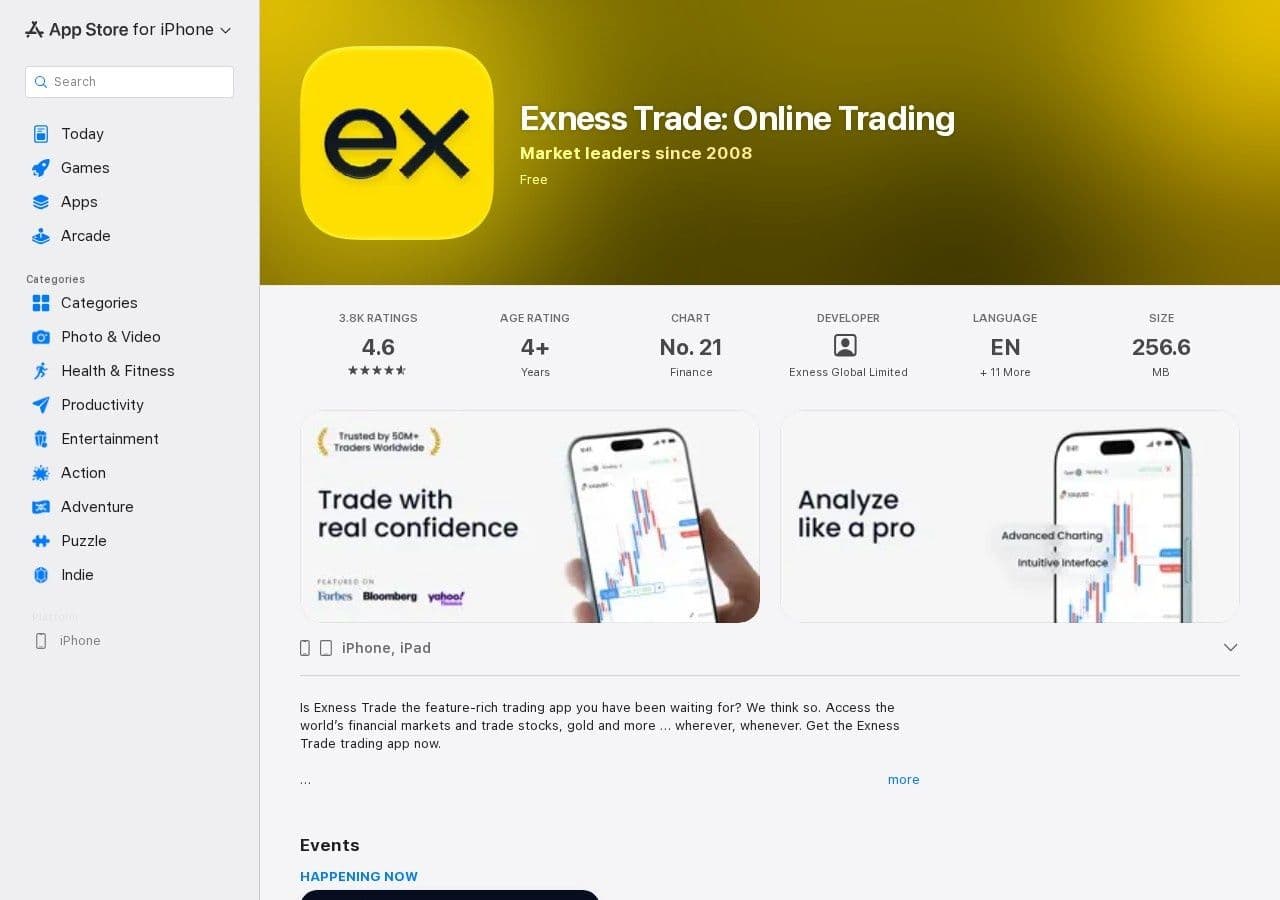
Exness is a forex and CFD broker group. Its demo page says registration comes with "an MT5-based demo account with $10,000 in virtual funds by default" (Exness demo trading account). You can change that balance at any time with "Set Balance" in the Personal Area or the Exness Trade app. Demo accounts are available for every account type except Standard Cent. They run on MetaTrader 4, MetaTrader 5, the MetaTrader WebTerminal, Exness Terminal and the Exness Trade app.
Exness says demo instruments trade under the "same conditions as on live trading accounts". That is a useful promise if you want to know how Exness's spreads and platforms behave. The page does not state an expiry.
Two facts on the same page matter to readers here.
- Who it serves. The page footer says the entities "do not offer services to residents of certain jurisdictions including the USA, Canada", Iran and North Korea, and goes on to name Europe, the United Kingdom, Russia and Belarus.
- Who regulates it. The footer names entities authorised in Seychelles (FSA), Curaçao (Central Bank of Curaçao and Sint Maarten), the British Virgin Islands (FSC), Belize (FSC) and Mauritius (FSC), and says the Seychelles entity is also authorised by South Africa's FSCA as an over-the-counter derivatives provider.
We are not telling anyone to use or avoid Exness. We are pointing out that a UK reader searching "Exness demo account" is searching for a broker that, by its own account, does not serve UK residents.
What regulators and data say
Fairness means reporting the official record factually, without adding to it.
- Kenya. CMA Kenya data reported by The Kenya Times in July 2026 shows that 77.58% of online forex accounts in Kenya lost money in 2025. The same report gives losing-account shares by broker, including 82.1% for Exness, 79.7% for HF Markets and 83% for Pepperstone (The Kenya Times). That is a secondary report of CMA data that we could not check against a CMA publication. The broker figures sit close to the national 77.58%, so they say more about retail forex than about any one firm.
- The Philippines. In January 2026, according to BitPinas, the Philippine SEC issued an advisory saying HFM and Exness are not authorised to solicit investments from the public in the Philippines, although both hold licences elsewhere. The advisory warned that promoters and influencers who encourage investment in them there may be criminally liable (BitPinas). That is a finding about Philippine registration, not about the demo.
- The UK. The FCA found that 82% of CFD clients lost money in a 2016 sample (FCA). That figure covers UK CFD firms generally.
None of this says anything about whether a demo is useful. It says that the live accounts demos lead to lose money for most people, which is the best reason to practise properly first.
Deriv, XM and HFM demos, briefly
Deriv, XM and HotForex, now HFM, also appear among the searches related to "demo account" in several forex-heavy markets (Google Trends, 12 months to October 2026). Here is what we could confirm.
- Deriv. Deriv's UAE help centre says it offers "a demo MT5 account with AED 10,000 virtual funds", available before you complete verification, with full access to the MT5 platform (Deriv help centre). The page does not mention resets or expiry.
- XM. XM's account-types page says you can test strategies with "virtual funds in a simulated environment" (XM account types). It does not state a balance or expiry. XM also runs demo trading competitions under published contest terms (XM contest terms).
- HFM. We could not load HFM's official demo page during our check, so we quote no figures for it.
All three are broker demos. Like Exness, they teach the broker's platform and conditions. None of the pages we read offers a trade plan, a loss limit or a course.
The $10,000 default, worked through
The common mistake is to accept the starting balance and start clicking. The consequence is a sizing habit built for money you do not have. Think of it like practising penalties on a goal twice the normal width. Your aim feels fine until the real goal appears.
Example, not a signal. A reader in Riyadh or Dubai plans to start with $500, about SAR 1,875 or AED 1,836 at the dollar pegs. Systemly's paper account runs in pounds, dollars or euros only, so this reader picks dollars. They risk 1% per trade, which is $5. A plan buys gold (XAU/USD) with a $4 stop. One lot of gold is 100 ounces, so a $1 move is $100 per lot.
- Loss per lot at the stop: $4 × 100 = $400.
- Lots for a $5 risk: $5 ÷ $400 = 0.0125 lots.
- Round down to the usual 0.01 minimum: 0.01 lots.
- Real risk: 0.01 × $400 = $4, which is 0.8% of $500.
Now apply the same 1% rule to the $10,000 default. 1% is $100, and $100 ÷ $400 = 0.25 lots. Take that 0.25-lot habit to a real $500 account and one $4 stop-out costs $100, which is 20% of the account. Five of those and it is gone.
Exness lets you fix this. "Set Balance" can bring the demo down to $500, which removes most of the problem. The difference is that Systemly makes the balance the first question and then sizes every plan against it, so there is nothing to remember.
The daily loss limit adds a second layer. On the "Keep it simple" preset, an untested starting point rather than a recommendation, the daily limit is 3%, which on $500 is $15. With $4 stop-outs, three losses take the day to $12, or 2.4%. A fourth takes it to $16, past the limit, and new trades are then blocked until the day resets at 21:00 UTC. That is midnight in Riyadh, Kuwait City and Doha, and 01:00 in Dubai. The rule exists so that the habit of stopping on a bad day is built before any money is real.
Exness demo vs Systemly paper trading, side by side
- What you practise: Exness demo account: Exness's platforms and conditions; Systemly paper trading: A written plan, at your size, under rules
- Starting balance: Exness demo account: $10,000 on a Standard MT5 demo; Systemly paper trading: You choose, 100 to 1,000,000
- Changing the balance: Exness demo account: "Set Balance" at any time; Systemly paper trading: Reset starts a new account; old history kept
- Currency: Exness demo account: Not stated on the demo page; Systemly paper trading: GBP, USD or EUR only
- Conditions: Exness demo account: "Same conditions as on live trading accounts"; Systemly paper trading: Broker-like rules on real prices; swap and slippage as labelled assumptions
- Platforms: Exness demo account: MT4, MT5, WebTerminal, Exness Terminal, Exness Trade app; Systemly paper trading: Systemly only
- Markets: Exness demo account: Exness's instrument list; Systemly paper trading: Major forex pairs and gold; silver, oil, indices, stocks and Bitcoin on Plus and Pro
- Orders: Exness demo account: Any order, any size; Systemly paper trading: Systemly's plans, through Execute and Paper
- Updates: Exness demo account: As prices move; Systemly paper trading: Results checked every 15 minutes
- Path to live: Exness demo account: An Exness live account, where available; Systemly paper trading: No live broker connection yet
- Risk limits: Exness demo account: None stated; Systemly paper trading: 1% per trade, 3% daily and 6% weekly loss limits by default
- Teaching: Exness demo account: None on the demo page; Systemly paper trading: 32-course Academy and "Why this trade"
- Open trades: Exness demo account: Not stated; Systemly paper trading: 3 on the free plan
- UK residents: Exness demo account: Exness says it does not serve them; Systemly paper trading: Paper account available in GBP
Exness is stronger on platform choice, markets, flexibility, speed and the route to a live account where it operates. Systemly is stronger on the plan, the size and the rules. One is practice for the broker. The other is practice for the trade.
What a broker demo cannot teach you
A broker demo is built to show you the broker, and it is very good at that. It is not built to teach you why a trade exists, and that is not a fault. Think of it like a car showroom: it lets you sit in the car and try the controls, but nobody expects it to give driving lessons.
Some demos also arrive with a lot of messages. A 2025 study of UK CFD apps used in demo mode counted the emails and push notifications that followed sign-up, and found most of the emails were engagement marketing (Andrade and colleagues, 2025). It looked only at UK apps, so Exness was not part of it, and it did not measure how many demo users went on to trade live. The practical point for a reader in the Gulf or the UK is simple: a demo can sit inside a sales process, so notice the prompts to deposit and judge them separately from the practice.
Fake money does not switch feelings off either. Students in a 2026 classroom study still felt the urge to win back virtual losses, even though nothing real was at stake (Finet, Kristoforidis and Laznicka, 2026). That urge is the one a daily loss limit is designed to interrupt. On paper, hitting the limit costs nothing, so it is the cheapest place to learn to walk away for the day.
The Systemly loop for a gold beginner
Here is the loop for the $500 reader above. Example, not a signal.
- Learn the idea. Start with Candle anatomy in the Technical Analysis strand, then Fair value gaps in the ICT / Smart Money school, so the zones on the chart mean something. Both open on Starter, Plus and Pro. On the free plan, start with Why most lose, which is free.
- Generate a plan on gold and read "Why this trade". Chart layers show swings, sessions and fair value gaps on Starter and above. If the answer is "no trade", read which checks failed and what could change the answer.
- Press Execute and choose Paper. The confirm dialog says "Paper trade. No real money." The size comes from your $500 balance. If the plan would need less than the minimum lot, it is refused rather than sized up.
- Let it run. Alerts arrive in the app and by browser notification for the fill, targets, stop and expiry. Results are checked every 15 minutes, and a plan that never fills expires as "Not filled, no money moved."
- Review and repeat. The trades dashboard shows balance, equity, open P&L and risk in use. When a losing run comes, take The four emotions and Building discipline in the Trading Psychology strand (Starter and above).
After a run of trades you can explain, you will be able to judge any broker demo, including Exness's, on its own terms.
Where the Exness demo is the better choice
- You have already chosen Exness, where it operates, and want to learn its platforms and spreads before going live.
- You want MT4, MT5 or Exness Terminal practice. Systemly is not a MetaTrader terminal.
- You want any order on any instrument Exness lists. Systemly paper trades come from its own plans and cover fewer markets.
- You scalp. Exness updates as prices move. Systemly checks results every 15 minutes, so it does not suit scalping practice.
- You want to move straight to a live account on the same platform. Systemly has no live broker connection yet.
- You want many open practice trades on a free account. Systemly's free plan holds 3.
The same applies to Deriv's and XM's demos for anyone who has already chosen those firms. For a wider view, see the best paper trading apps compared and MT5 demo account vs a paper trading plan.
How we checked
We read the official demo pages of Exness, Deriv and XM, listed below, and tried HFM's without success. Regulator and loss figures come from the FCA, a secondary report of CMA Kenya data and a report of the Philippine SEC advisory, each labelled. All facts were checked on 18 October 2026. Broker terms, availability and regulation change and differ by country, so check the page for your own country.
FAQ
Is the Exness demo account free?
Yes. Exness's demo page says registration comes with a Standard MT5 demo account holding $10,000 of virtual funds, and that demo accounts are virtual and cannot be funded with real money. You can change the balance any time with "Set Balance". It is available for every Exness account type except Standard Cent. You need to register with Exness to get one.
Can I use an Exness demo account in the UK?
Exness's own site says the entities it lists do not offer services to residents of the United Kingdom, Europe, the USA, Canada and some other countries. UK readers can take that at face value. For UK readers who want to practise forex or gold, the options include demos from FCA-authorised firms and paper accounts in pounds, such as Systemly's.
How do I reset my Exness demo balance?
Exness says you can open the My Accounts tab in the Personal Area, or use the Exness Trade app, and click "Set Balance" on the demo account. The page does not say whether this replaces or adds to the balance. Set it to the amount you really plan to trade, so your lot sizes match a real account.
Is the Exness demo the same as a real account?
Exness says demo instruments trade under the same conditions as on live trading accounts. Conditions are only part of it. No demo reproduces the fear of losing real money, and research finds virtual money redirects emotion rather than removing it. Paper and demo results do not predict live results, whichever provider you use.
What is the difference between a demo account and paper trading?
The words mean much the same thing: practice trades with virtual money. "Demo account" is the usual term in broker-name searches, including across the Gulf, and it usually means a broker's practice account. "Paper trading" is more common in the UK, the UAE, the US, Australia and Singapore. Systemly's paper trading adds a plan, real-size sizing and loss limits.
Does Deriv have a demo account?
Yes. Deriv's UAE help centre says it offers a demo MT5 account with AED 10,000 of virtual funds, which you can use before completing verification, with full access to the MT5 platform. The page does not mention resets or expiry. Like any broker demo, it teaches the broker's platform rather than how to build and review a trade plan.
Practise the trade first
If you want your practice to start with a plan rather than a platform, create a free Systemly account and set your paper balance to the amount you will really trade, in pounds, dollars or euros. Gold, and the Why most lose course in the Systemly Academy, are both on the free plan. Candle anatomy and Fair value gaps, the two courses the gold loop above starts with, open on Starter alongside the chart layers that draw those gaps, and Plus adds silver, oil and Check my trade for a trader whose interest runs beyond gold. Each paid plan has a 3-day free trial.
Test a gold lot size in the free Risk Doctor, and look at real plans in the community feed. More at systemly.ai.
From this series: paper trading in the UAE, is forex trading halal, and why paper trading lets Gulf traders learn first and demo account UK. For the sizing maths, read how to trade gold (XAU/USD), the forex position size calculator guide and why most signals leave out position sizing.
Sources
- Exness, demo trading account (including restricted jurisdictions and entity licences in the footer): https://www.exness.com/demo-trading-account/
- Deriv UAE help centre, demo account: https://deriv.com/ae/help-centre-question/does-deriv-offer-a-demo-account
- XM, account types: https://www.xm.com/account-types
- XM, contest terms: https://www.xm.com/assets/pdf/terms/XM-Contests_Terms-and-Conditions.pdf
- The Kenya Times, CMA Kenya forex data for 2025 (secondary report): https://thekenyatimes.com/business/kenyan-forex-traders-lose-ksh7-12-billion-in-2025-as-online-fx-losses-rise-46-6/
- BitPinas, Philippine SEC advisory on Exness and HFM (January 2026): https://bitpinas.com/regulation/sec-exness/
- FCA, proposed CFD rules and 82% loss figure (December 2016): https://fca.org.uk/news/press-releases/fca-proposes-stricter-rules-contract-difference-products
- Andrade, Costa, Weiss-Cohen, Torrance and Newall (2025), Behavioural Public Policy: https://www.cambridge.org/core/journals/behavioural-public-policy/article/trading-is-a-losing-game-an-audit-of-deceptive-choice-architecture-in-demomode-contract-for-difference-cfd-trading-apps/07BB4E4CC011413D8A41458F9ED32928
- Finet, Kristoforidis and Laznicka (2026), Behavioral Sciences 16(8), 1440: https://www.mdpi.com/2076-328X/16/8/1440
- Google Trends, 12 months to October 2026 (Systemly's own pull, relative interest only)
Trading forex and CFDs carries a high risk of losing money, and most retail accounts do. Paper trading uses no real money, and paper results do not predict live results. Systemly is an educational and trade-planning tool. It does not provide financial advice or personal recommendations, and it is not authorised by the FCA or licensed in the UAE or elsewhere to do so. Past outcomes do not predict future results.