
How to learn forex trading as a beginner when theory stops working
 Systemly Team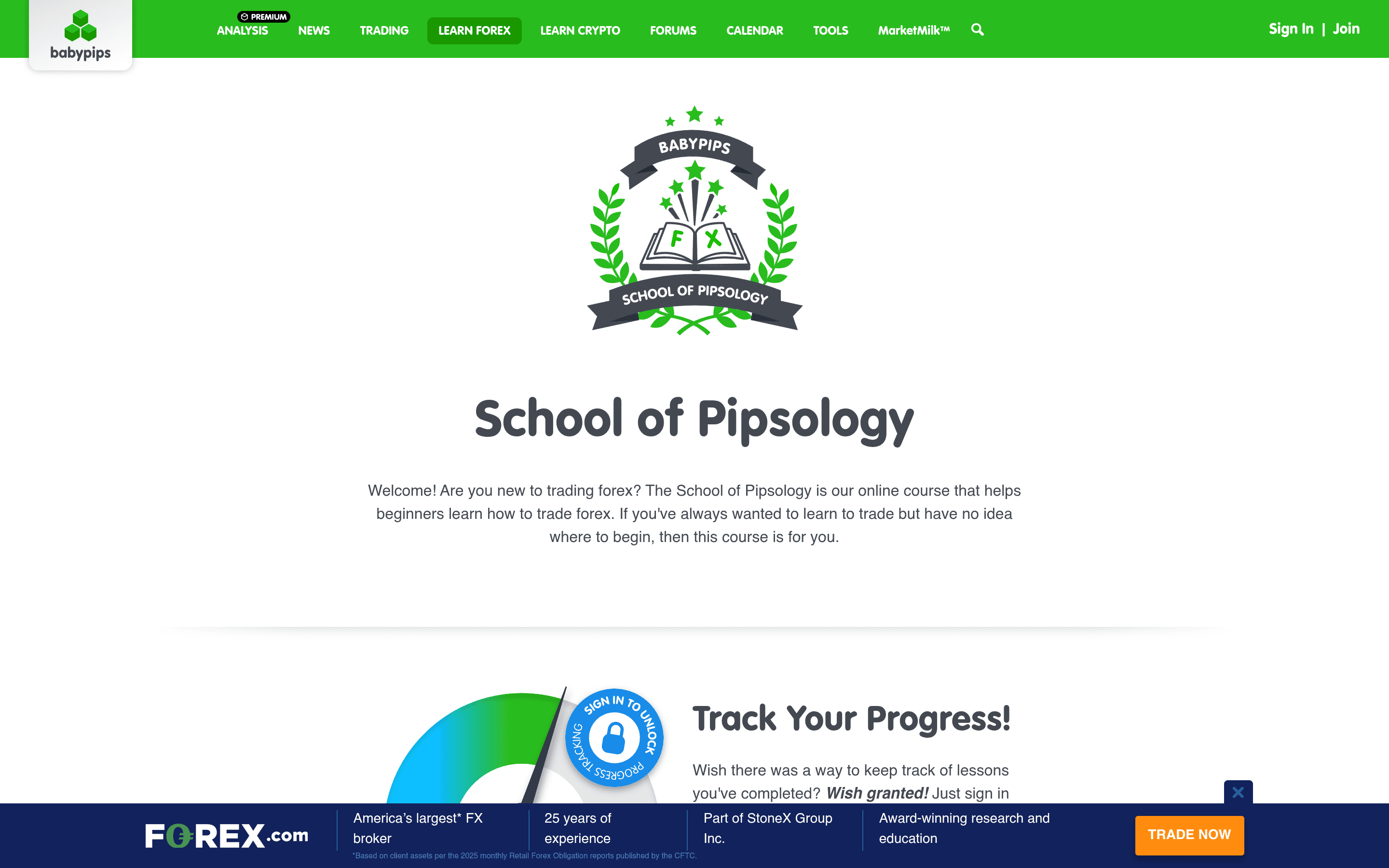
It is Sunday evening. You passed the quizzes, you know what a pip is, and you can recite the difference between a limit order and a stop order. You open a live chart of EUR/USD with a cup of tea and every intention of placing your first trade. Twenty minutes later the tea is cold and you have not clicked anything.
An r/FakeGuru user described that moment in July 2026 better than any course could: "I could point at a support line on a chart. I couldn't tell you why it mattered."
Here is the direct answer. As a beginner, you close that gap by learning the theory inside real trade plans and then practising on a demo account, not by finishing a theory course first and hoping the doing follows. Theory-first courses such as BabyPips, Investopedia Academy and Udemy teach the words well. Learning inside a plan, which is how Systemly (systemly.ai) is built, teaches you what the words are for.
Quick answer: To learn forex trading as a beginner, pair theory with real trade plans from the start. Theory-first courses such as BabyPips, Investopedia Academy and Udemy are good for vocabulary but rarely show a term inside a live trade. Systemly suits beginners who want graded lessons in the same app as complete trade plans, so each field of a plan (entry, stop, targets, size, reasoning) maps to a lesson. Practise every plan on a demo account before risking real money.
Systemly publishes this comparison. We have tried to be fair to the courses we set ourselves against, and every competitor fact below is sourced and dated 24 September 2026.
Why can't I place a trade after finishing a forex course?
Knowing and doing are separate skills, and most courses only train the first one.
The common mistake is to believe that understanding every term on its own means you can combine them under pressure. The consequence is the cold-tea moment. You can define support, resistance, stop loss and lot size one at a time, but a trade asks all four questions at once, with real prices moving, and nobody ever made you answer them together.
Think of it like learning to drive from the Highway Code alone. You could pass the theory test with full marks and know every sign and stopping distance. Put you behind the wheel on a wet roundabout and the knowledge is all there, but it has never been joined to your hands and feet. Nobody learns to drive that way. You learn with an instructor beside you, in a real car, applying the rules as they come up.
Forex education mostly skipped the car. A BabyPips forum member put it candidly: the School "aims not to teach you how to trade, but rather to provide some basic information about trading." That is an honest statement of purpose, and it is also the gap this guide is about.
How theory-first courses teach you
Each of these three is good at something. None of them joins the lesson to a trade.
BabyPips
The School of Pipsology is a text course with illustrations and no video, running through grade levels from "Preschool" to "Doctorate" with quizzes at the end of sections. It is written in plain English with a friendly tone, and it has a long-standing forum and a huge brand behind it. For many beginners it remains the gentlest first meeting with the vocabulary.
Its limit is that the lessons do not connect to real-time charts, as a TakeProfit review of the School points out. Part of it also moved behind the Premium paywall in 2026, and Premium has cost $29 a month since 8 April 2026. We compare it with Systemly in detail in BabyPips vs Systemly after the price rise.
Investopedia Academy
Investopedia Academy is a set of video courses with quizzes and certificates. A third-party review by TradingReview.net describes it as "extremely basic" and "completely non interactive". Investopedia's free trading simulator is a separate product, so the course and the practice do not sit together.
Udemy
Udemy lists 713 forex courses with an average rating of 4.4. The format is video, and most sales happen at $10 to $20. Quality varies widely from teacher to teacher, and the star ratings are collected early, because Udemy prompts learners to leave a review early in a course.
All three share a structure: explanation first, then a quiz or nothing, then you are on your own with a chart. On r/Trading one beginner summed up where that leaves people: "There's so much information out there that it's overwhelming, and I'm not sure what to focus on first".
What learning inside a trade plan looks like
Systemly is a UK-built forex and gold trade-planning app that turns live price data into a complete trade plan, with entry, stop, targets, position size and plain-English reasoning, and teaches the terms in a built-in academy of 32 courses.
In practice, you pick an instrument and press scan. In under a minute you get either a plan or a plain statement that there is nothing worth trading right now. A plan tells you which way to trade, where to get in, where to get out if it goes wrong, where to take money off in steps, the position size for the balance and risk percentage you entered, and why, including what would make it fail.
The Academy sits in the same app. It has 123 lessons and 642 graded questions, a little under 12 hours in all, across six subject areas. You answer, it marks you, and a few wrong answers end the attempt, so you cannot scroll past a lesson you have not understood. When a plan uses a term such as stop, lot, invalidation or liquidity, the lesson that explains it is in the same place.
That order matters. A theory-first course asks you to learn a hundred terms before you see one used. A plan shows you six terms working together on a real chart, and sends you to the lessons you need next.
Every field of a trade plan is a lesson
This is the most useful table in the guide. Screenshot it. Each row is one field of a complete trade plan, the question it answers, and the mistake beginners make when they have not learned it.
- Direction: The question it answers: Buy, sell, or stay out?; What you need to learn: Trend and market structure; The mistake without it: Trading every day because you feel you should
- Entry: The question it answers: Where exactly do I get in, and why there?; What you need to learn: Support, resistance and order types; The mistake without it: Chasing a move after it has happened
- Stop: The question it answers: At what price is my idea proven wrong?; What you need to learn: Invalidation and where stops cluster; The mistake without it: A stop set by how much you can bear to lose, not by the chart
- Targets: The question it answers: Where do I take money off, in steps?; What you need to learn: Risk-reward and scaling out; The mistake without it: Holding a winner until it turns into a loser
- Position size: The question it answers: How many lots, for my balance and my risk?; What you need to learn: Pips, lots and contract size; The mistake without it: A 0.10 lot trade on a £500 account
- Reasoning: The question it answers: Why does this plan exist, and what would break it?; What you need to learn: Building and testing a trading plan; The mistake without it: Taking a trade you cannot explain to anyone
- Outcome record: The question it answers: What did price actually do afterwards?; What you need to learn: Journaling and review; The mistake without it: Remembering only the wins
Read the right-hand column slowly. Every one of those mistakes happens to people who have passed a theory course. The reason is not that they missed the lesson. It is that they never saw the lesson doing its job on a real chart.
Systemly follows each plan after it is sent and records which level price reached, when, and how far it went against the trade first, including the plans that lose. That last row is the one most courses never teach, because they have nothing to review.
A worked example: sizing one EUR/USD trade on a £500 account
Position size is the field beginners most often get wrong, so here is the arithmetic done slowly. One r/Trading user put the danger plainly: "Most accounts don't die from one bad trade. They die from a series of oversized trades and no real process."
Assume a £500 account and a rate of $1.34 to the pound, so the account is worth about $670. We will work in dollars throughout to keep the sum simple.
- Decide your risk. At 1% per trade, that is $6.70.
- Read the stop from the plan. Say the stop is 30 pips from the entry.
- Find the value of a pip. On EUR/USD, one standard lot is 100,000 euros, and a one-pip move (0.0001) is worth about $10 per standard lot. Check your own broker's contract specification.
- Work out the loss per standard lot at the stop: 30 pips × $10 = $300.
- Divide your risk by that loss: $6.70 ÷ $300 = 0.0223 lots.
- Round down to the nearest size your broker allows: 0.02 lots.
At 0.02 lots, each pip is worth $0.20, so a 30-pip loss costs $6.00. That is about 0.9% of the account, a little under your 1% limit, which is the right side to err on. Round up to 0.03 lots instead and the same stop costs $9.00, about 1.3%.
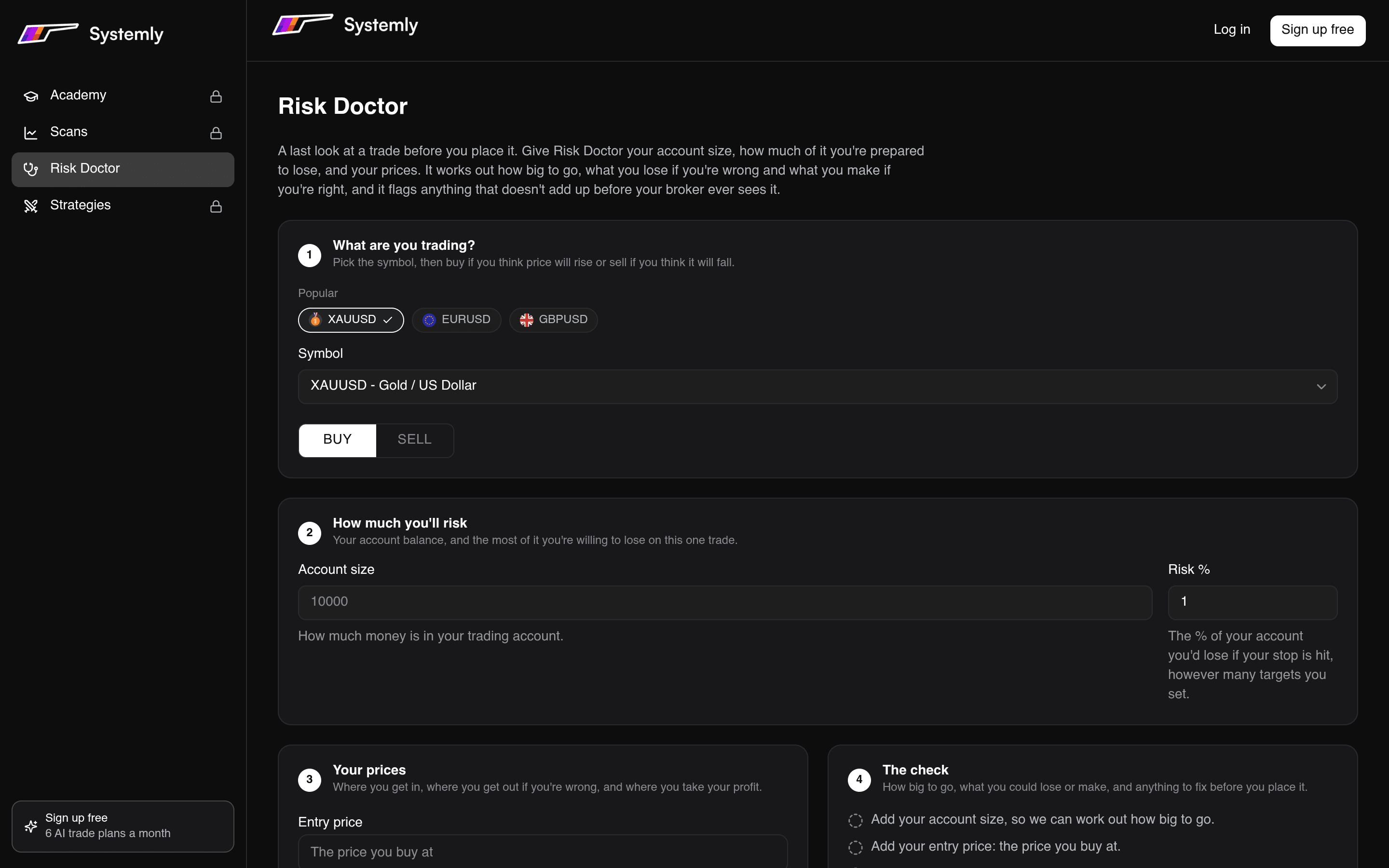
A course can teach you those six steps. What it cannot do is sit next to each real trade and do them for your balance. A plan does, and so does the free Risk Doctor position-size check, which looks at a trade's risk and size before you place it. For gold, where contract sizes trip up far more beginners, see our guide to position sizing, the part signals leave out.
Theory-first courses vs learning inside a plan
- What it is: BabyPips: A text forex course; Investopedia Academy: Video courses with quizzes and certificates; Udemy: A marketplace of video courses; Systemly: A trade-planning app with a graded academy
- Price (24 Sept 2026): BabyPips: Free lessons; Premium $29 a month; Investopedia Academy: Not verified; check the site; Udemy: Mostly $10 to $20 on sale; Systemly: Free plan with part of the Academy; paid plans add alerts, more plans and execution
- Size of free reading: BabyPips: Large: 169 free lessons advertised; Investopedia Academy: Not verified; Udemy: Varies by course; Systemly: Smaller: part of 123 lessons
- Video teaching: BabyPips: None; Investopedia Academy: Yes; Udemy: Yes; Systemly: None; it is not a video library
- Graded practice: BabyPips: Quizzes at section ends; Investopedia Academy: Quizzes; Udemy: Varies; Systemly: 642 graded questions; wrong answers end the attempt
- Live charts: BabyPips: Not connected to real-time charts; Investopedia Academy: Not in the course; the simulator is separate; Udemy: Varies; Systemly: Charts drawn live inside lessons
- Joined to a real trade plan: BabyPips: No; Investopedia Academy: No; Udemy: No; Systemly: Yes, in the same app
If you learn best from video, or you want the biggest free library, Systemly is the weaker choice on those rows. It is built for the last row.
A 30-day learn-by-doing plan
This is a month that uses a demo account (practice money only), the Systemly community scans and the Academy together. It assumes 30 to 45 minutes a day. It promises no profits, because nothing honest can. Its aim is the one an r/Daytrading user put best: "Your only job is to not blow up while you learn."
Days 1 to 7: read before you touch
- Do the Foundations lessons in the Academy until you pass them, not until you have read them once.
- Each day, open two plans in the public feed of community trade scans and read every field aloud. Opening a full plan needs a free login.
- For every term you cannot explain, find its lesson and pass it the same day.
- Place no trades, not even on demo.
Days 8 to 14: explain the stop
- For each plan you read, write one sentence on why the stop sits where it does.
- Compare your sentence with the plan's own reasoning. Note where you were wrong.
- Work out the position size for your demo balance by hand, then check it with Risk Doctor.
- Start the Trading Psychology lessons.
Days 15 to 23: trade the plan on demo, at the planned size
- Take plans on your demo account exactly as written: same entry, same stop, same size for your balance.
- Do not move the stop. One r/Forex user wrote: "I blew my account after stupidly adjusting the stop loss and then going for some revenge trading".
- Keep a journal with the plan, your reason for taking it and how you felt.
- When a scan says there is nothing worth trading right now, read why. Those plans teach patience.
Days 24 to 30: review what actually happened
- Compare your journal with the recorded outcomes: which level price reached, and how far it went against the trade first.
- Retake any lesson where your journal shows you misunderstood the term.
- Write down three rules you will keep before any real money is involved.
- Decide honestly whether you are ready for a small live account, or need another month on demo.
Some people call losses on a first live account "the tuition fee of blowing an account", as one r/Trading user put it. This month is a way of paying a smaller fee, in time instead of money.
Where a theory-first course is the better choice
A theory-first course is the better choice if you are not yet ready to look at a chart at all. BabyPips' free School, with its bigger free library and long-standing forum, is the kindest possible start, and it costs nothing for the early grades. If you learn best from a person talking you through ideas on video, Udemy or Investopedia Academy will suit you better than graded questions. The honest route for many readers is BabyPips first for the words, then plans and practice for the doing. Our overview of the best way to learn forex trading in the UK compares six routes side by side.
How we compared
We looked at how BabyPips, Investopedia Academy and Udemy structure their teaching, using their own pages, the Udemy forex topic page, and independent reviews by TakeProfit and TradingReview.net. We set those against Systemly's own product facts, without using any Systemly performance figure, because we do not publish one. Facts were checked on 24 September 2026. Prices change, and Investopedia Academy's current price could not be verified, so check each site before you pay.
FAQ
How do I learn forex trading as a beginner?
Start with the basic vocabulary from a free course, then learn by reading complete trade plans and practising them on a demo account with practice money. Make sure every term you learn, such as stop, lot size and risk-reward, is one you can use on a real chart. Graded lessons help, because they show you what you have not understood yet.
What should a forex trading plan for beginners include?
A beginner's forex trading plan should state the direction, the exact entry, a stop at the price that proves the idea wrong, targets for taking profit in steps, a position size worked out from your balance and risk percentage, and the reasoning, including what would make the trade fail. Afterwards it should record what price actually did, so you can review it honestly.
Why can't I trade after finishing BabyPips?
BabyPips teaches forex vocabulary well, but its lessons do not connect to real-time charts, and its own forum describes it as basic information rather than a guide to trading. Knowing terms and combining them under live conditions are different skills. Most people close the gap by reading complete trade plans and practising them on a demo account.
Can I learn forex trading for free?
Yes, you can learn the basics of forex trading for free. BabyPips still offers its early grades free, broker academies such as IG Academy cost nothing, and YouTube has good teachers. Systemly has a free plan that includes part of its academy and a public feed of community trade scans. A demo account lets you practise with no real money at risk.
Should beginners use a demo account first?
Beginners do well to start on a demo account. It uses practice money, so you can learn to follow a plan, size a position and keep a stop in place without losing real funds. Treat it seriously by trading the size you would use for real. Most retail CFD accounts lose money, so practising on demo before going live is a sensible first step.
How much should a beginner risk per trade?
There is no single right figure, and this is not advice, but this guide's worked example uses 1% of the account per trade. On a £500 account that is £5, or about $6.70 at $1.34 to the pound. The position size then depends on your stop distance and the instrument's pip value. Always round your lot size down, not up, so that the real risk stays inside your limit.
Learn the words where they are used
If you want each lesson to lead straight to a real entry, stop and position size, start with the graded lessons in the Systemly Academy, and see how a complete plan is built on the Systemly home page.
Sources
- r/FakeGuru comment, July 2026: https://www.reddit.com/r/FakeGuru/comments/1ulo1ks/_/ov5jcl8/
- BabyPips forum, School of Pipsology: https://forums.babypips.com/t/school-of-pipsology/1228940
- TakeProfit review of the School of Pipsology: https://takeprofitapp.com/en/learn/babypips-school-of-pipsology-review
- BabyPips Premium lock-in page: https://premium.babypips.com/lock-in
- TradingReview.net, Investopedia Academy review: https://tradingreview.net/investopedia-academy-review/
- Udemy forex topic page: https://www.udemy.com/topic/forex/
- r/Trading, information overload: https://www.reddit.com/r/Trading/comments/1raloyp/
- r/Trading, oversized trades: https://www.reddit.com/r/Trading/comments/1rluknj/_/o8uubda/
- r/Daytrading, not blowing up while you learn: https://www.reddit.com/r/Daytrading/comments/1sxohie/_/oiocrt3/
- r/Forex, adjusting the stop loss: https://www.reddit.com/r/Forex/comments/1eaijju/_/lensc4d/
- r/Trading, the tuition fee: https://www.reddit.com/r/Trading/comments/1unddir/_/owazxkn/
- Systemly: https://www.systemly.ai
- Systemly Academy: https://www.systemly.ai/academy
- Systemly community scans: https://app.systemly.ai/scans
- Systemly Risk Doctor: https://app.systemly.ai/tools/risk-doctor
Trading forex and CFDs carries a high risk of losing money, and most retail accounts do. Systemly is an educational and trade-planning tool. It does not provide financial advice or personal recommendations, and it is not authorised by the FCA to do so. Past outcomes do not predict future results.